ZippyScore
ZippyScore is a proprietary rating based on 6 criteria: performance, portability, display, battery, value, and connectivity.
See rating criteria
- Performance: CPU / GPU performance
- Portability: Screen size & weight
- Display: Panel type, aspect ratio & refresh rate
- Battery: Rated battery life
- Value: Specs-to-price balance
- Connectivity: Port types & count
Pros & Cons
Pros
- 32GB of RAM keeps multitasking snappy, even with a bunch of stuff open
- A rated 20-hour battery means you're covered all day out and about
- Solid port selection with Thunderbolt 4 supports up to 4-screen output
- 16:10 high-res IPS display makes reading source code easy on the eyes
Cons
- Stock charger needs 100W — a 65W charger will trigger slow charging
- The hinge lifts slightly when opened one-handed, but two hands opens it smoothly
Specs Summary
| OS | Windows 11 Home |
|---|---|
| CPU | Intel Core Ultra 5 225U (PassMark: 17,844) Intel Core Ultra 7 255H (PassMark: 48,931) Intel Core Ultra 5 225H (PassMark: 28,599) |
| RAM | 16GB / 32GB |
| Storage | 512GB |
| Display | 14" IPS (Anti-glare, 60Hz) 1920x1200 (16:10) |
| Weight | 1.41 kg (3.11 lbs) |
| Ports | USB-C × 1 (Thunderbolt 4/40Gbps/PD/Video out), USB-C × 1 (10Gbps/PD/Video out), USB-A × 1 (10Gbps), USB-A × 1 (5Gbps), HDMI × 1 (ver.2.1), Headphone jack × 1 |
| GPU | Intel Graphics (G3D Mark: 3,183) Intel Arc 140T (G3D Mark: 5,634) Intel Arc 130T (G3D Mark: 6,156) |
| Biometrics | Face Recognition |
| Battery | Up to 20 h (Capacity: 59 Wh) |
| Dimensions | Approx. 314 × 226 × 18.9 mm (W × D × H) |
| Wi-Fi | Wi-Fi 7 |
| Bluetooth | Bluetooth 5.4 |
| Color | Meteor Silver / Glacier Silver |
Configurations vary by retailer, region, and availability.
Hands-on Review
On to the hands-on review of the OmniBook 7 14-fr — here's the configuration I tested:
| Spec | Review Unit Configuration |
|---|---|
| CPU | Intel Core Ultra 7 255H |
| Memory | 32GB |
| Storage | 1024GB SSD |
| Display | 14" IPS (2240x1400) |
| Graphics | Intel Arc 140T |
| Color | Glacier Silver |
Configuration may vary depending on purchase timing and retailer.
Design
First up, the design. The unit I've got is in Glacier Silver — the OmniBook 7 14-fr also comes in Meteor Silver and SAKURA — and this Glacier Silver finish has a matte, smooth texture where fingerprints don't really show up, which I appreciated. Given the price point, it doesn't feel cheap at all.
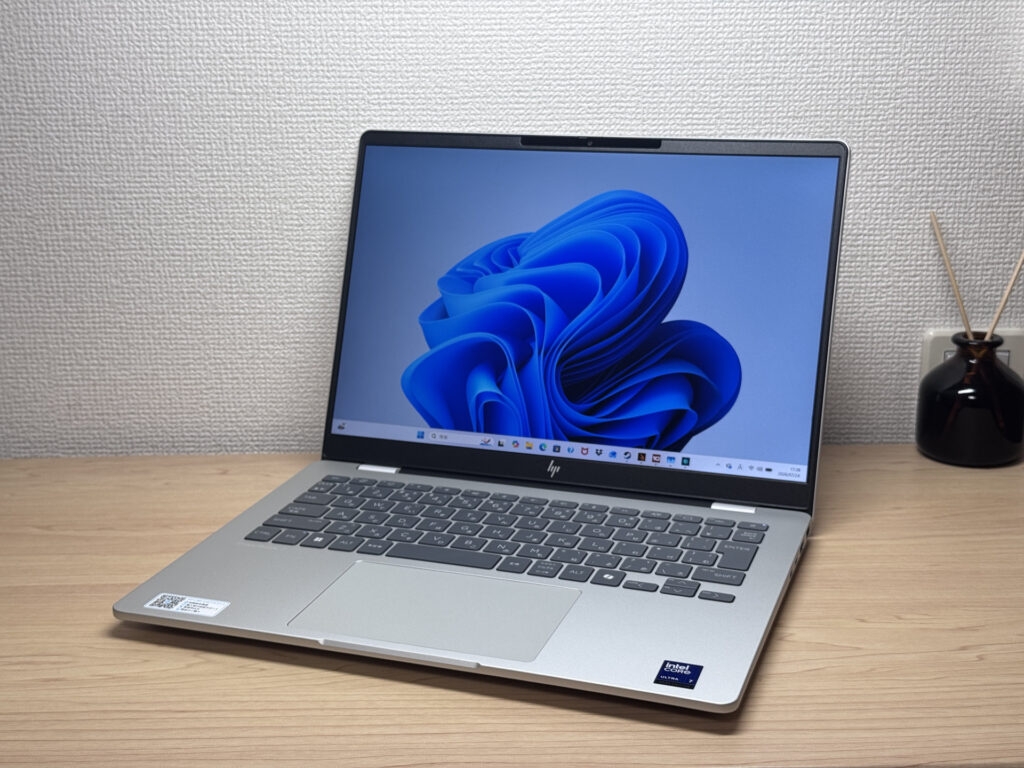 That matte finish feels great right off the bat!
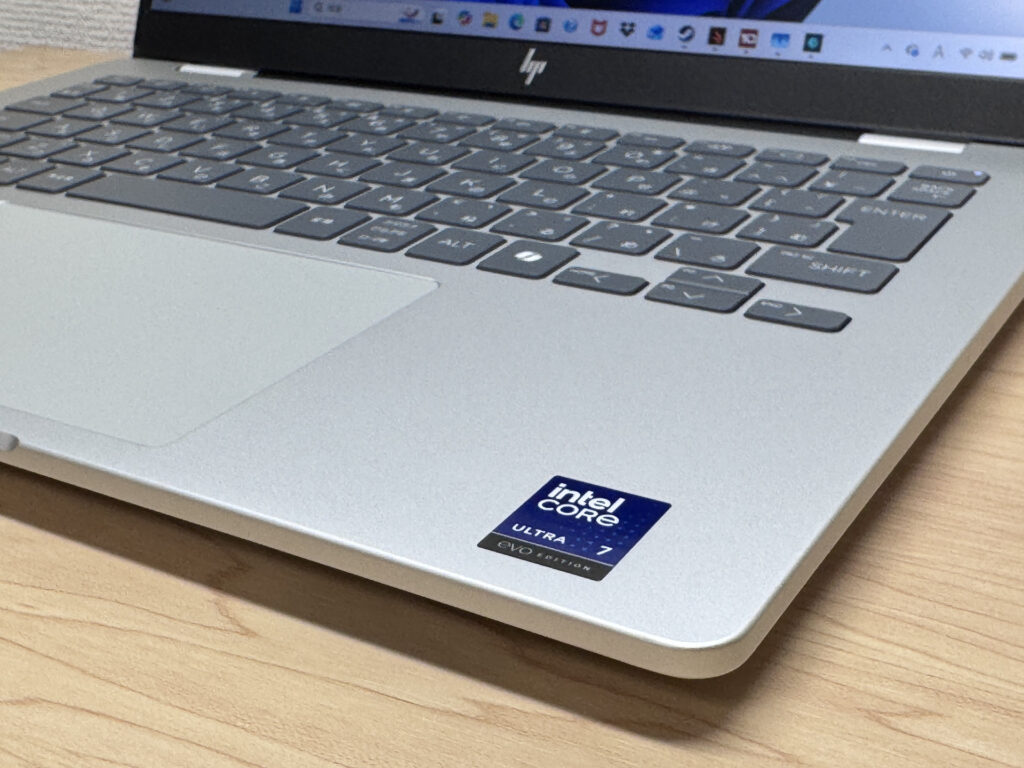 Fingerprints staying invisible is a quietly nice touch 👍
The lid keeps it simple, with the HP logo placed subtly.
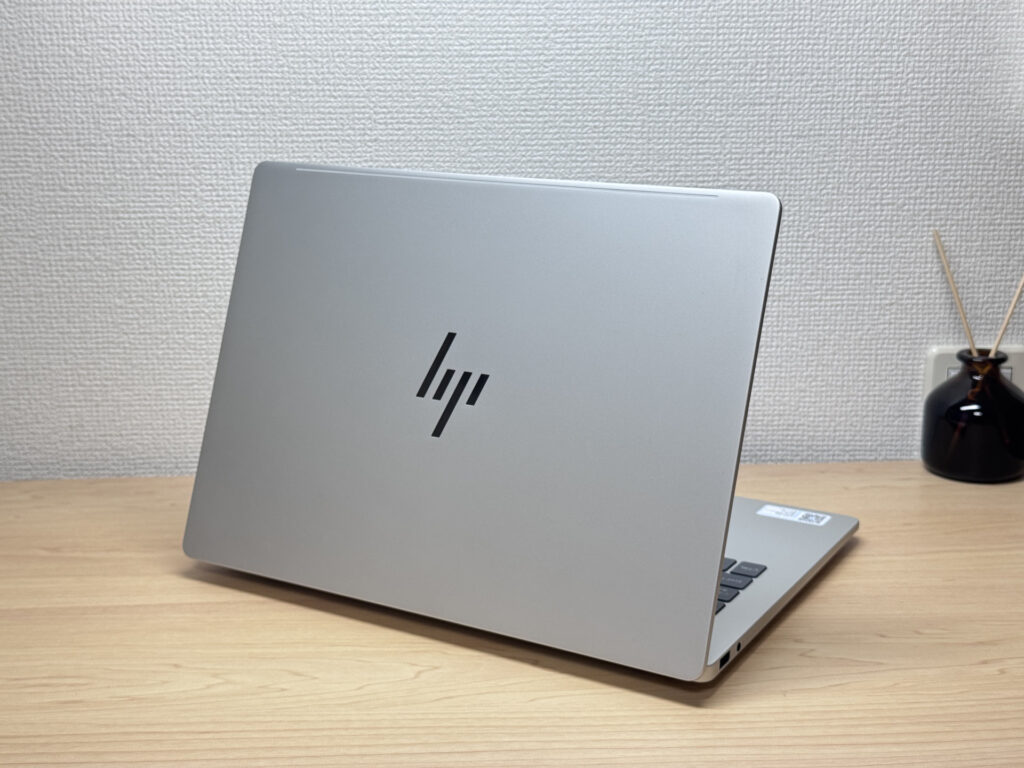 That understated HP logo works well
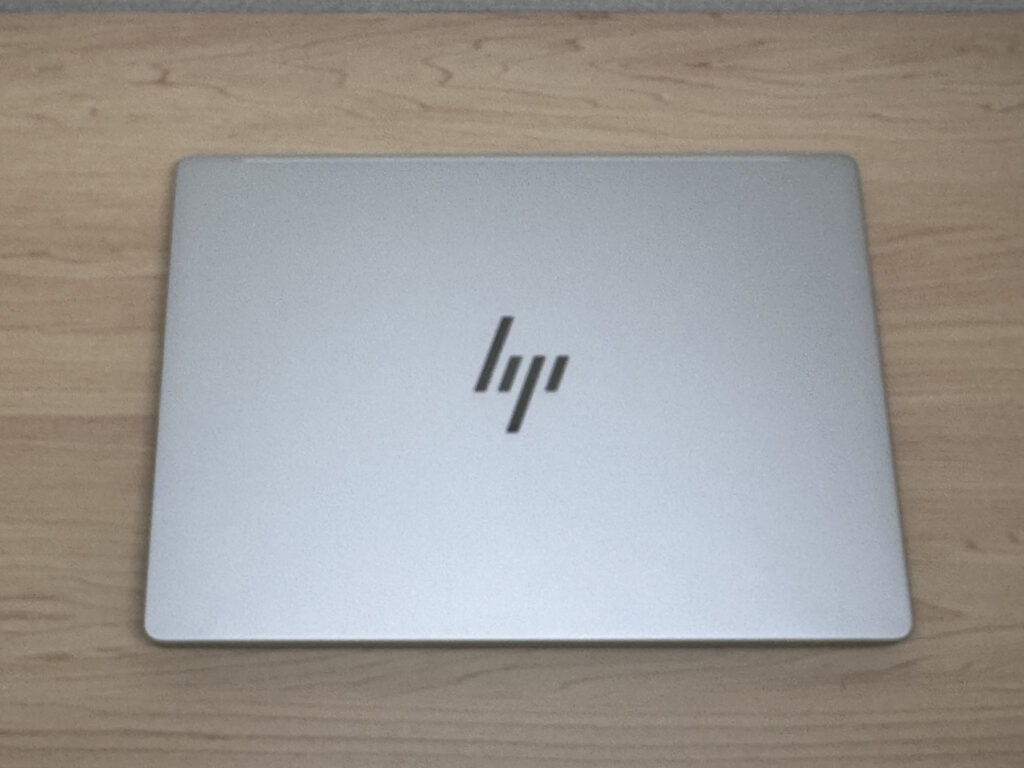 Nothing flashy about the lid, and that's fine by me
As for thickness, it measures 314 x 226 x 18.9mm — pretty standard for a 14-incher. It's not ultra-thin, but the size is more than fine for everyday use.
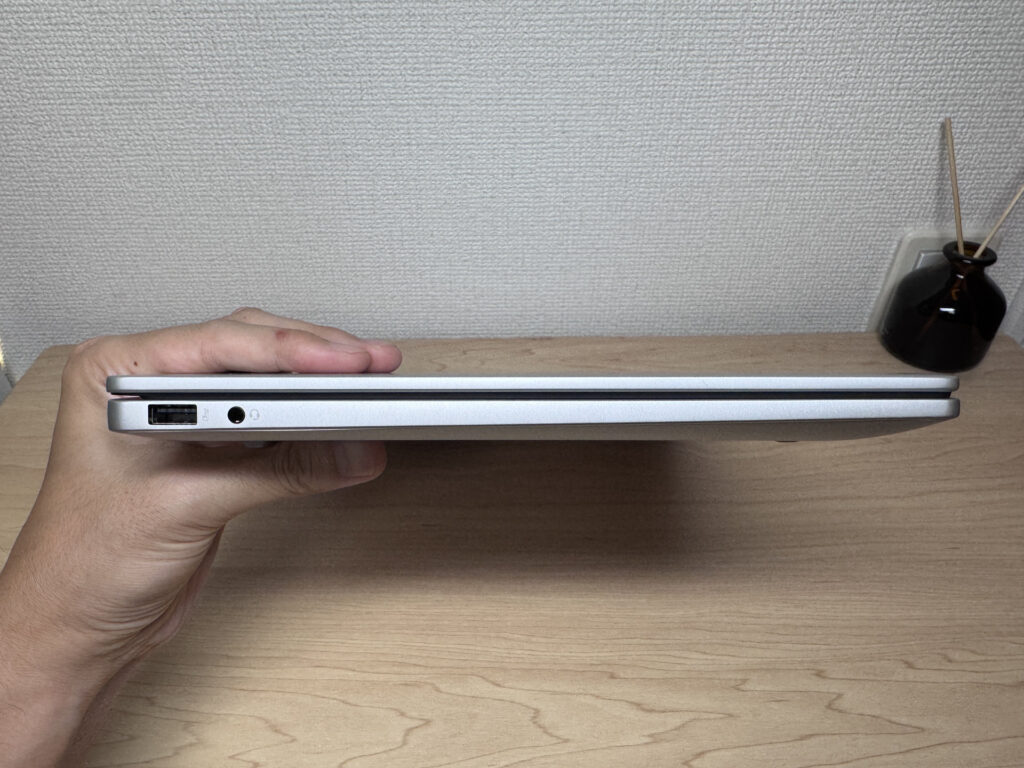 Standard thickness that slides right into a bag
The bottom has a fairly large intake vent that seems to be doing real work for cooling. The rubber feet are solid too, so there's no sliding around while typing.
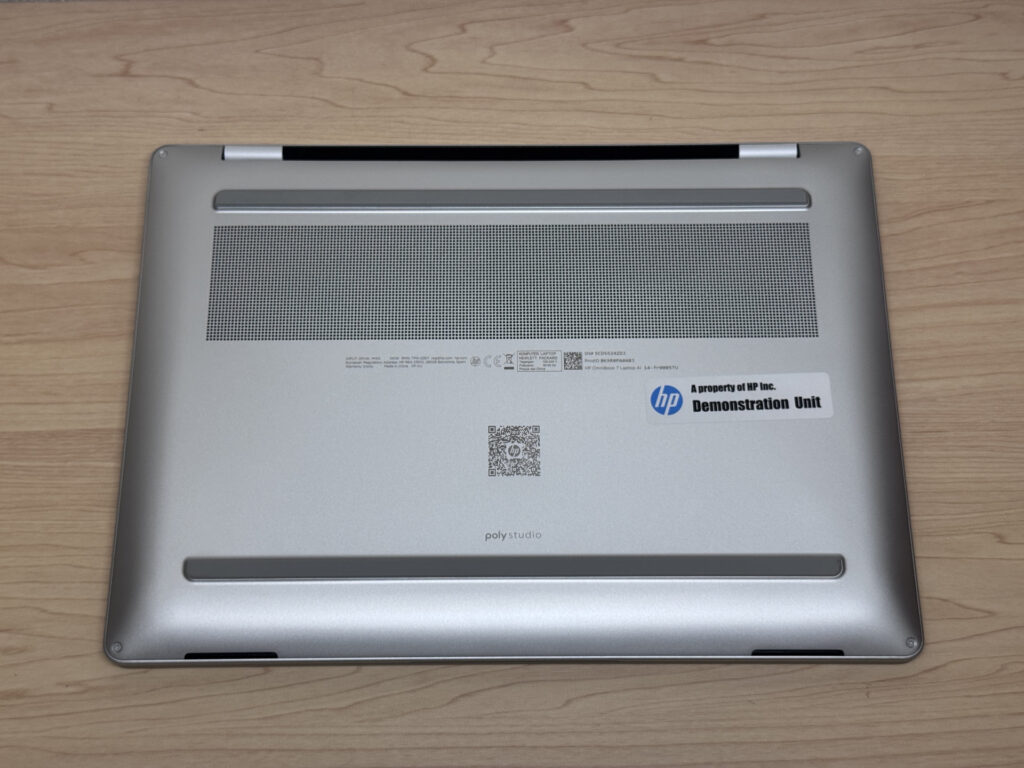 Found a good-sized intake vent and sturdy rubber feet
Opening the lid one-handed, the base lifts up slightly. That said, if you open with your right hand while lightly holding the base down with your left, it opens smoothly enough — not a big deal.
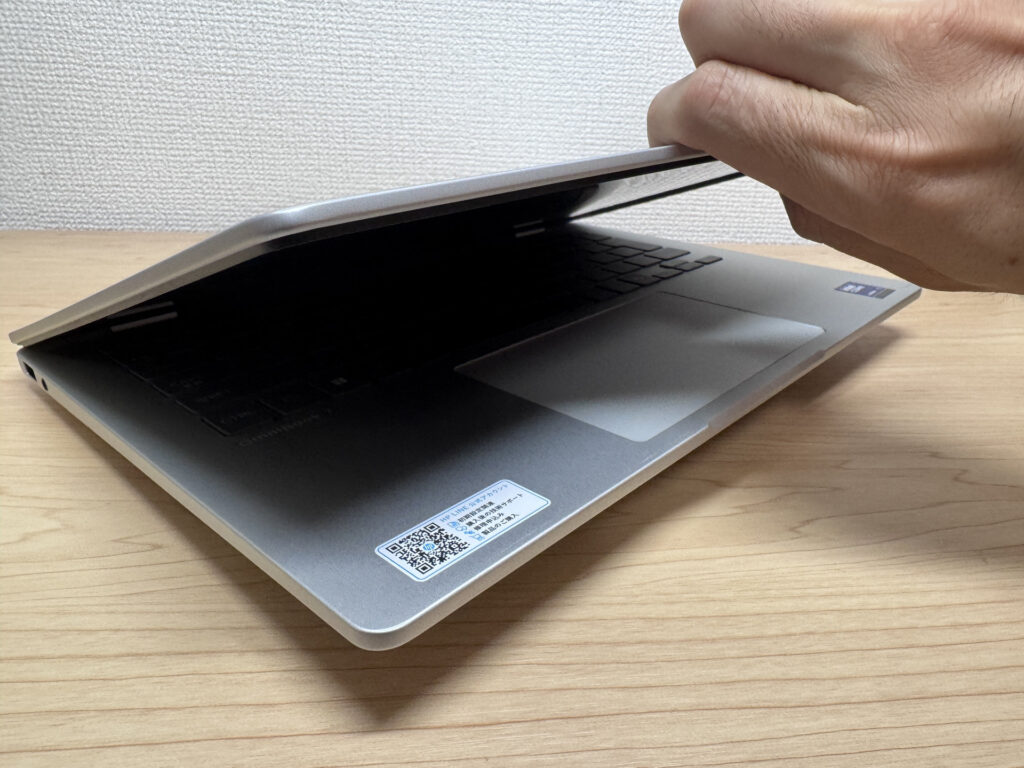 It lifts a bit one-handed, but nothing to worry about
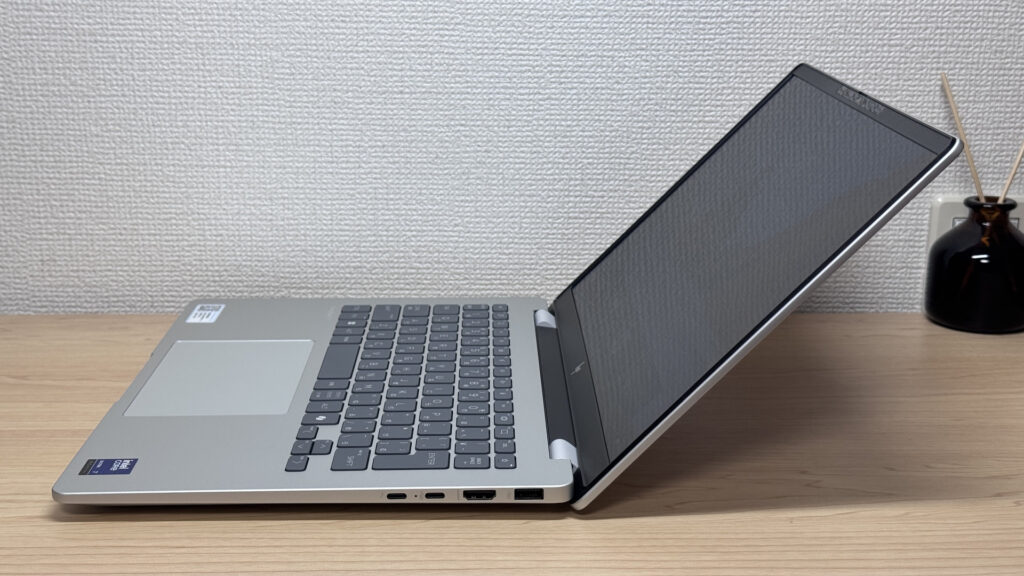 The opening angle is plenty for everyday use
Portability
Next, portability. I weighed it myself and got 1488g, which lines up closely with the rated ~1.41 kg (3.1 lbs).
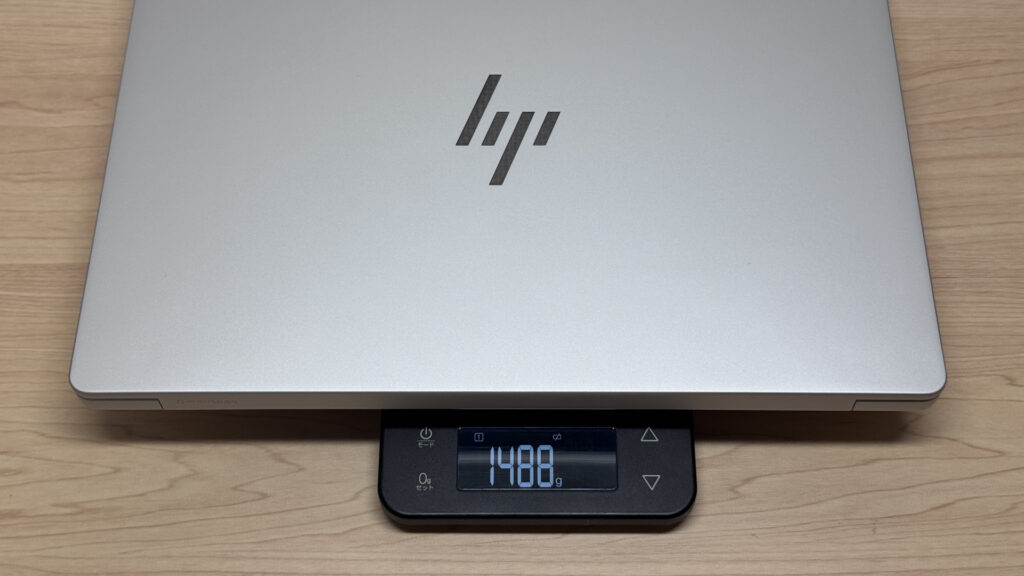 1488g on my scale — right in line with the spec sheet!
The stock charger weighed in at about 422g, which is on the heavier side — that's because this laptop needs 100W of power. Honestly, that surprised even me.
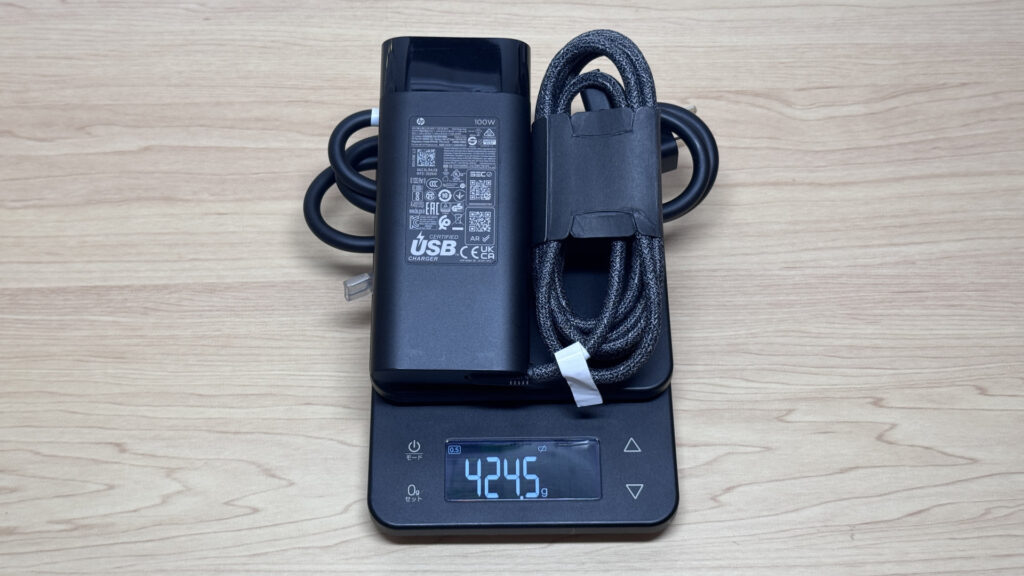 About 422g — a bit of a brick as chargers go
At around 1.41 kg (3.1 lbs), it's not featherlight, but it's a pretty standard weight for the 14-inch class, and it's totally fine to toss in your bag for the daily commute or carry to class. One-handed, you definitely feel the heft, but with both hands it's easy enough to manage. More on that charger weight in the battery section below.
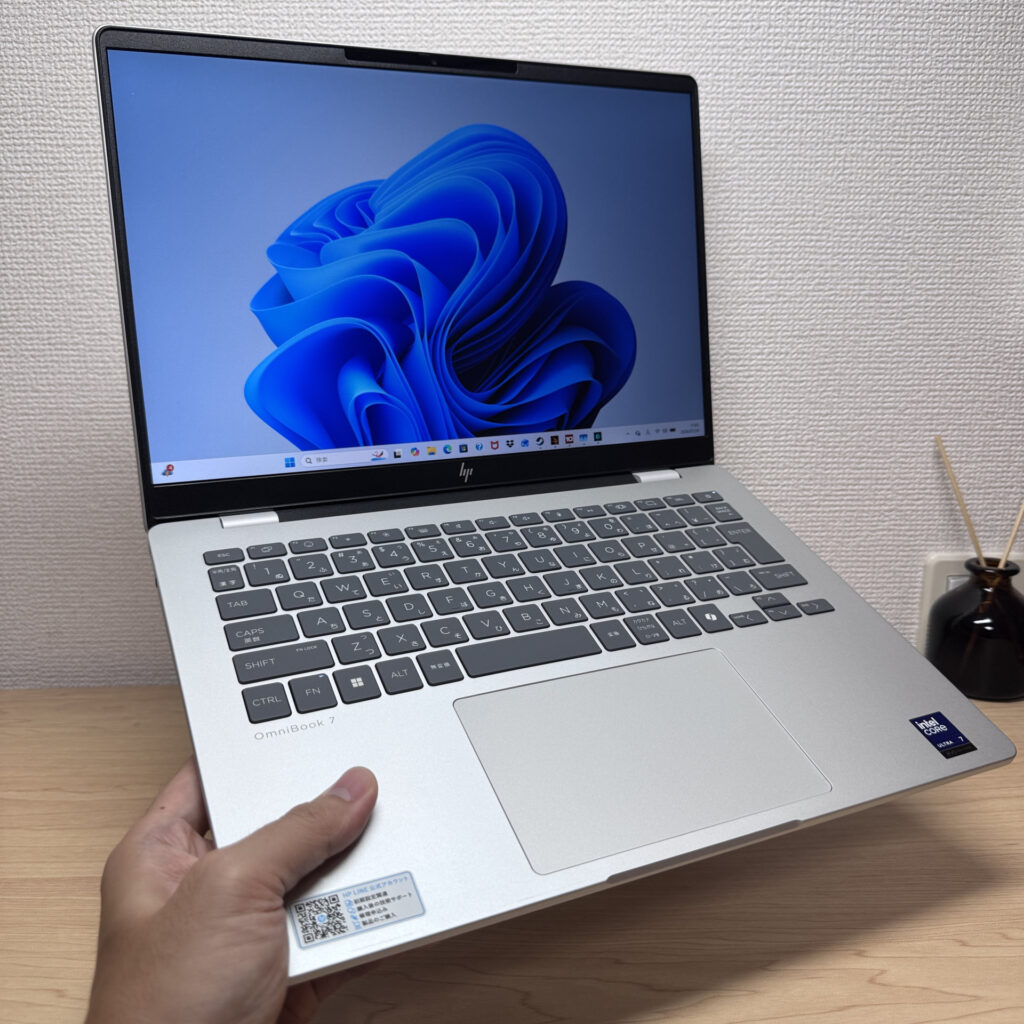 Heavy one-handed, no problem with both hands
Display Quality
On to the display. This unit's got a 14-inch, 2240x1400 IPS panel, and the color output is genuinely good. I pulled up a photo of some colorful roses and the vivid tones came through clearly.
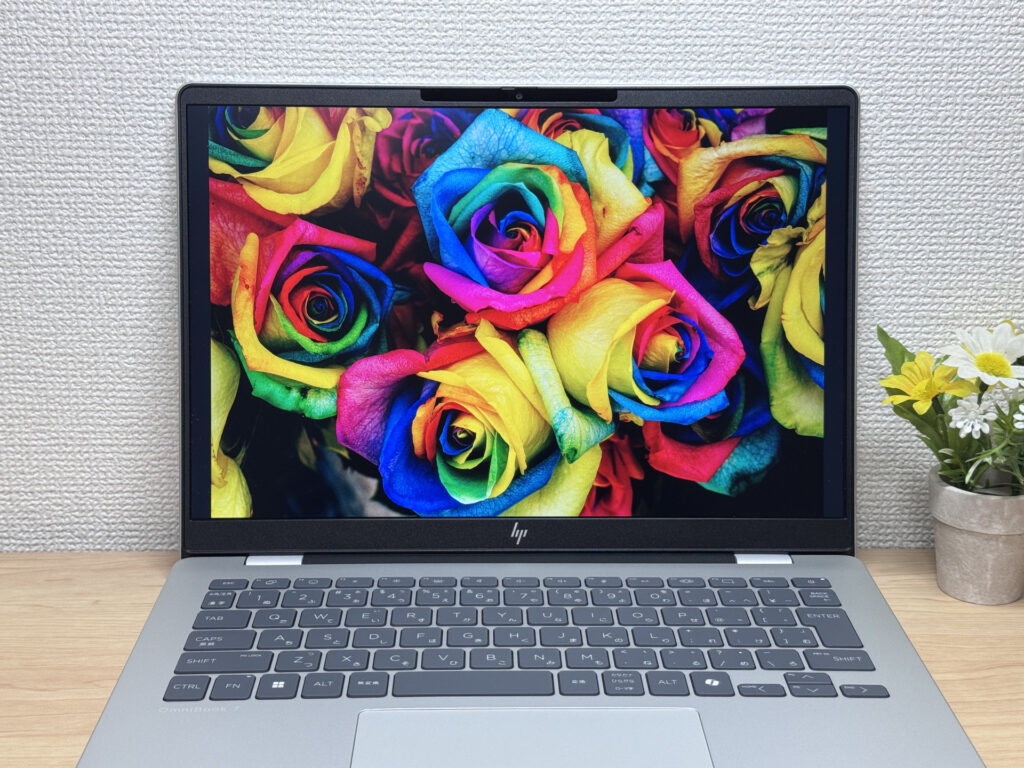 The roses looked gorgeous — genuinely striking image quality
Viewing angles are wide too — colors barely shift even when you look at it from an angle. That's IPS doing its job, and it makes a real difference day to day.
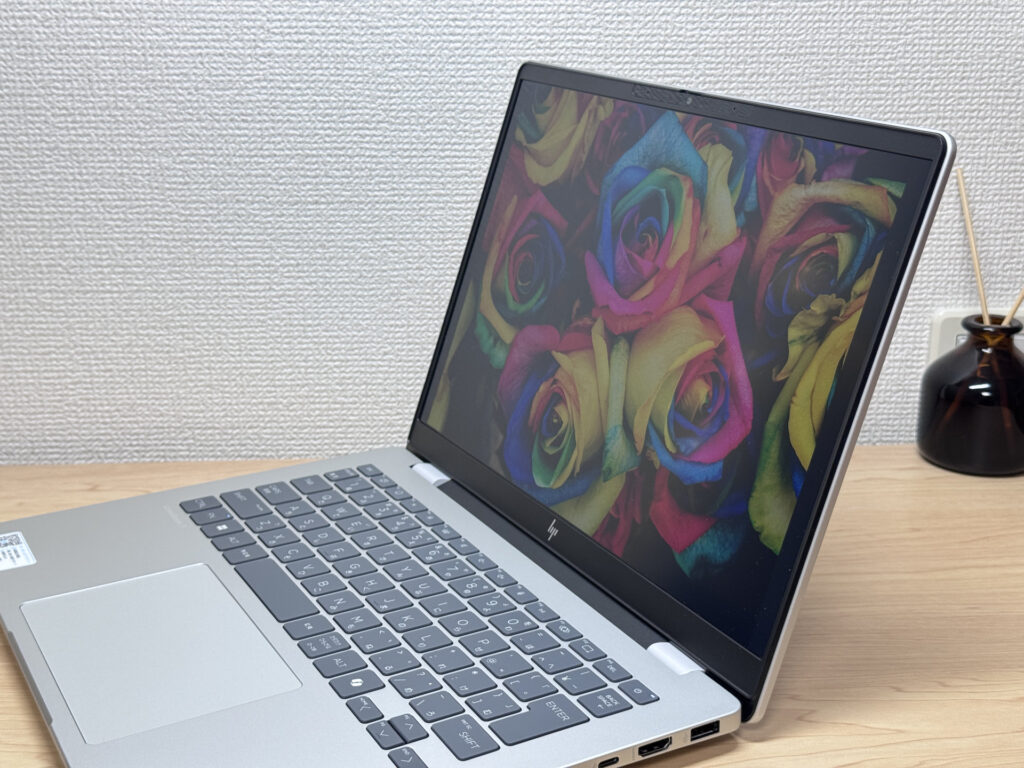 Colors hold up well even off-angle!
The aspect ratio is 16:10, and setting it next to a 16:9 laptop makes it obvious how much extra vertical space you get. It's one of those quietly useful things — less scrolling, more of a document visible at once. Pulling up some source code, it was noticeably easy to read too.
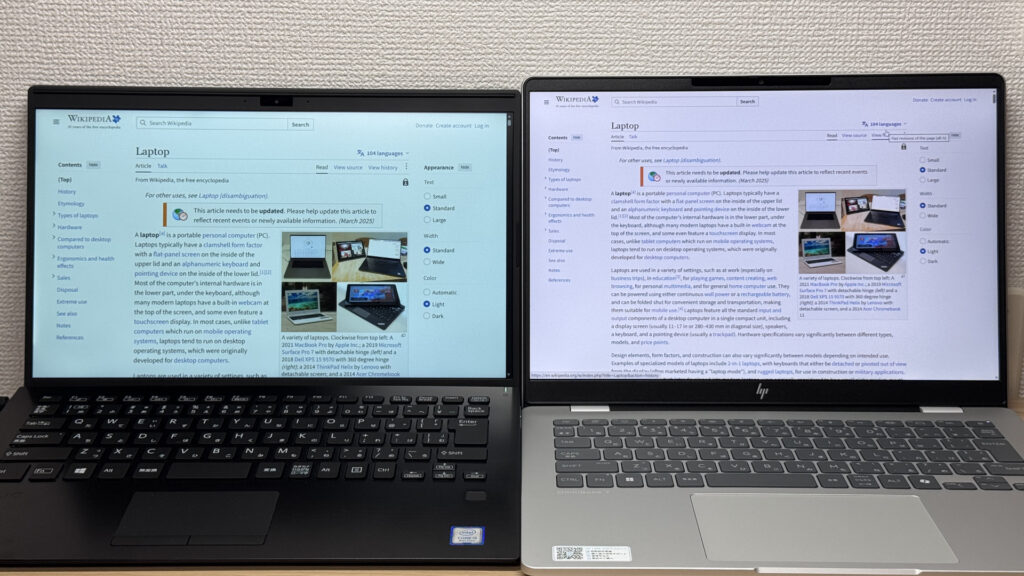 That 16:10 ratio gives you real extra vertical space
Brightness measured at 300 nits — not blindingly bright, but plenty for everyday use. And since it's a matte, anti-glare panel, reflections stay well under control even under indoor lighting.
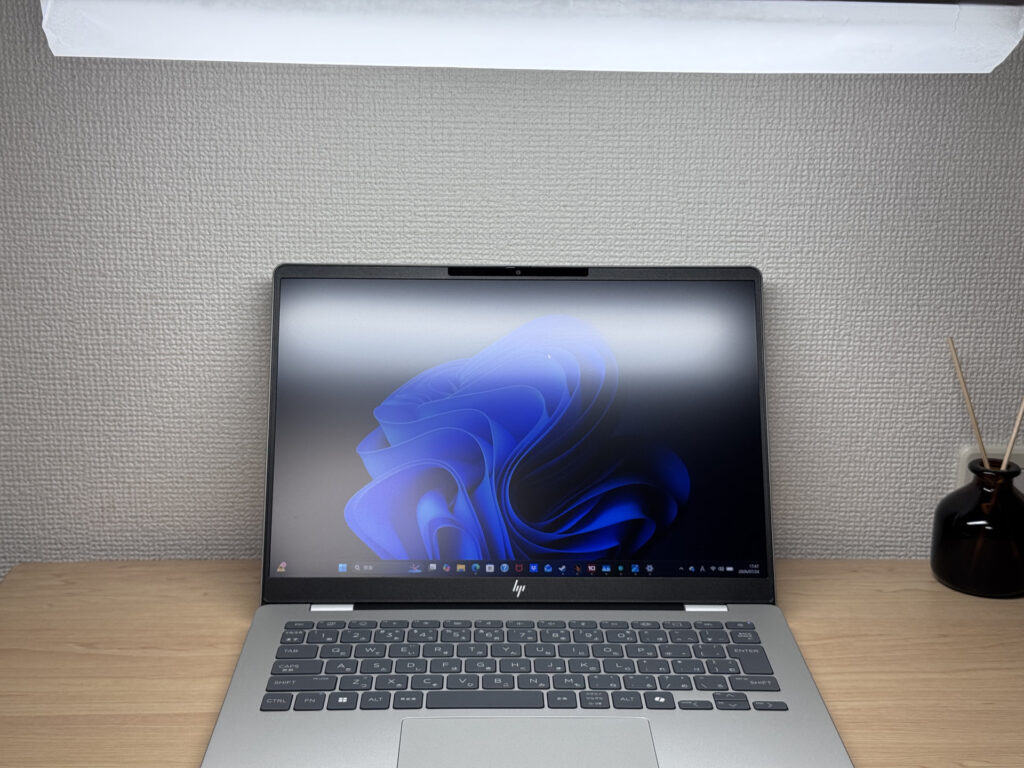 The matte finish keeps reflections way down
Keyboard Comfort
The keyboard uses an isolated-key layout and felt genuinely pleasant to type on.
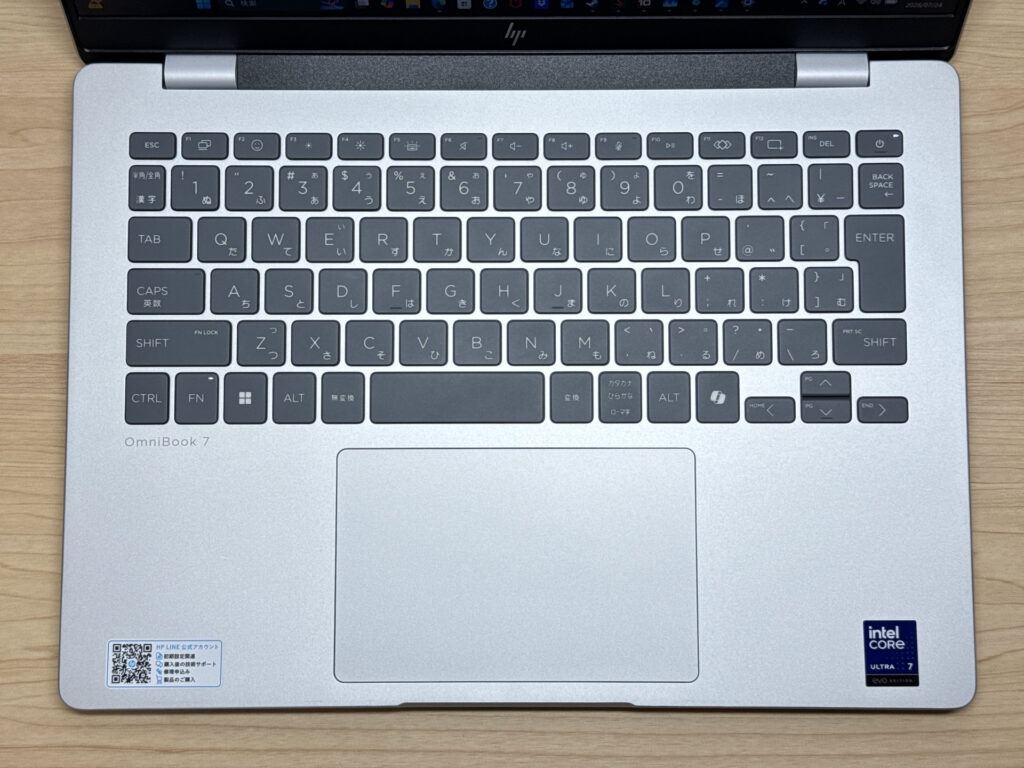 This layout looks like it'll be comfortable to type on
I typed away with some source code pulled up, and thanks to the sturdy chassis there's zero flex — just a light, clicky feel with every keystroke. Honestly, this is exactly the kind of feel I personally like.
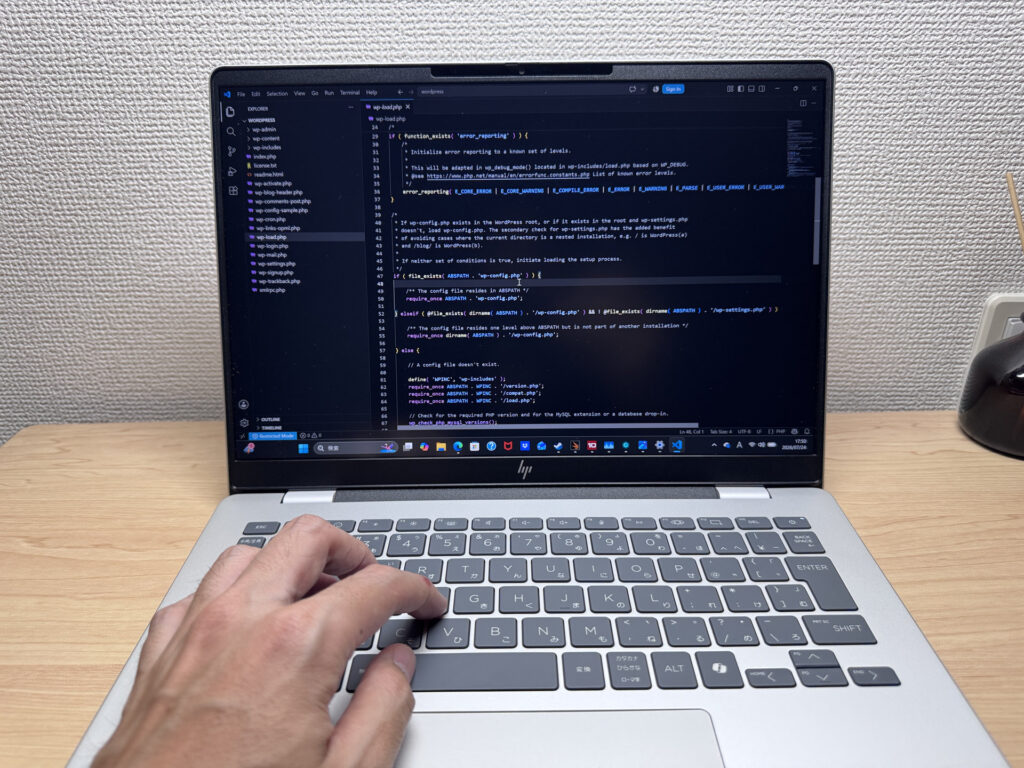 Zero flex, light and clicky — great typing feel!
It's got backlighting too, so working in dim rooms isn't an issue.
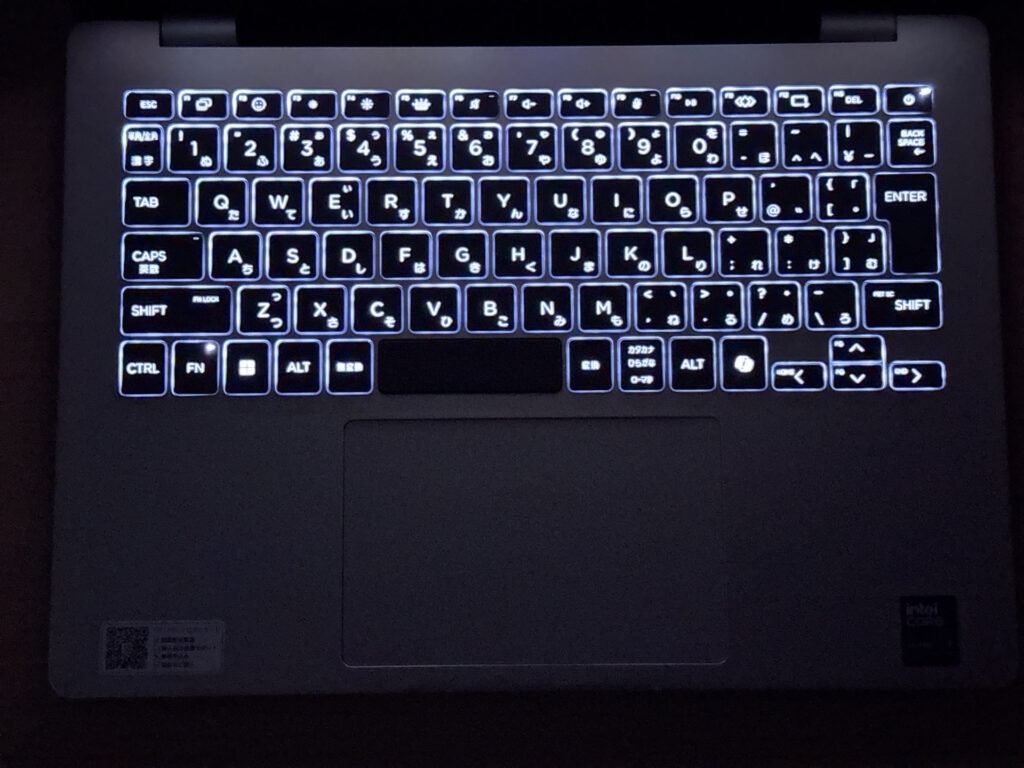 Backlighting has you covered in low light
Heads-up: these photos are the Japan-market unit, so the keyboard shown is the Japanese layout. US models ship with the standard US (ANSI) layout.
Touchpad
Next up, the touchpad. It's on the larger side relative to the keyboard, and my finger glided across it smoothly.
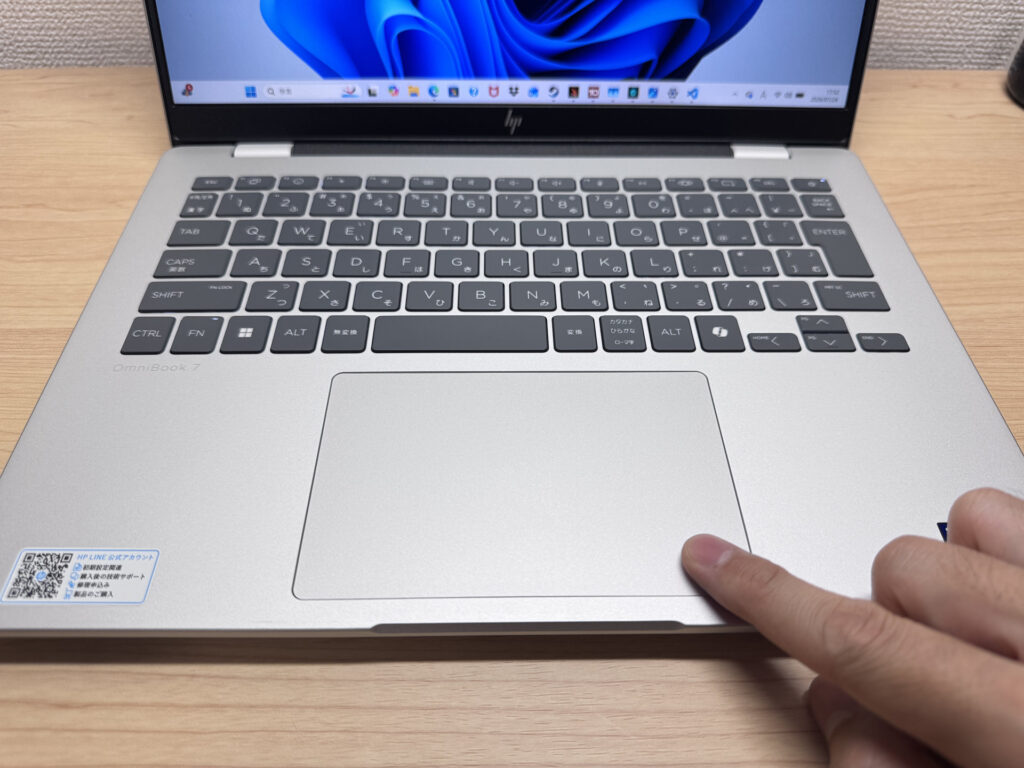 Generously sized, with a smooth glide
Three- and four-finger gestures registered smoothly too — with a touchpad this size, you could easily get by without a mouse.
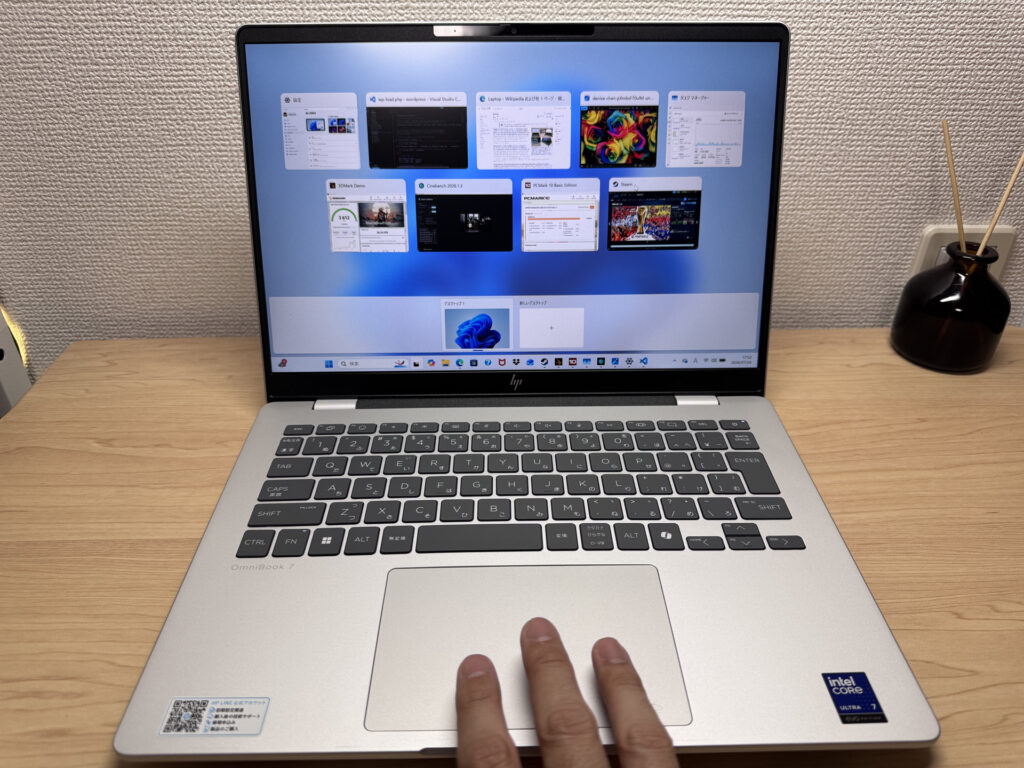 Gestures register quickly and reliably
Performance
Time to check performance. It scored 8736 on PCMark 10, which tracks with the high-end Core Ultra 7 255H and 32GB of RAM under the hood — a solidly high number. Everyday use feels snappy, and it's got enough muscle for light video editing too.
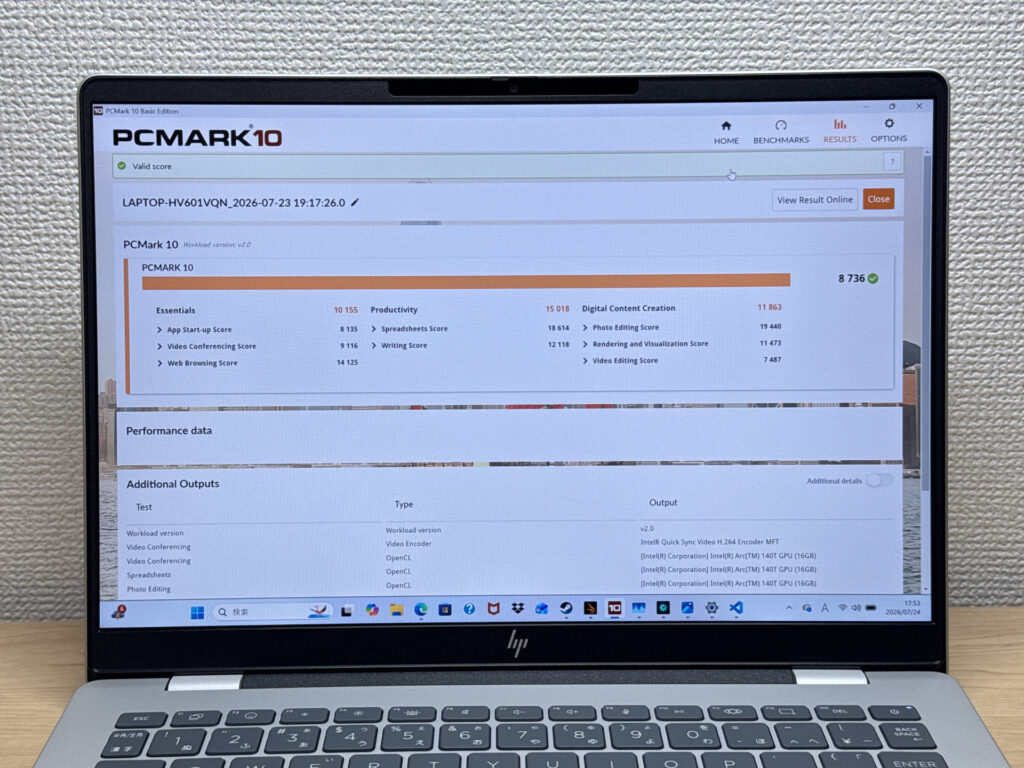 8736 on PCMark 10 — a strong score!
| Total Score | Rating | What it feels like in real use |
|---|---|---|
| ~4,000 | Bare minimum | Web browsing and simple tasks work, but multitasking or many tabs feels sluggish. |
| 4,000–5,000 | Light use | Daily tasks are doable, but running multiple apps means waiting around. |
| 5,000–6,500 | Comfortable (mainstream) | Handles most work without stress — fine for office, school, video calls. |
| 6,500–8,000 | High performance | Plenty of headroom. Light photo editing and programming feel snappy. |
| 8,000+ | Very high performance This PC | Tackles video editing and heavy workloads. Long-lasting performance. |
*PCMark 10 reflects overall comfort. Actual feel depends on CPU, RAM, and SSD speed.
I also ran Cinebench 2026, and it posted a strong 4271 points on the multi-core test.
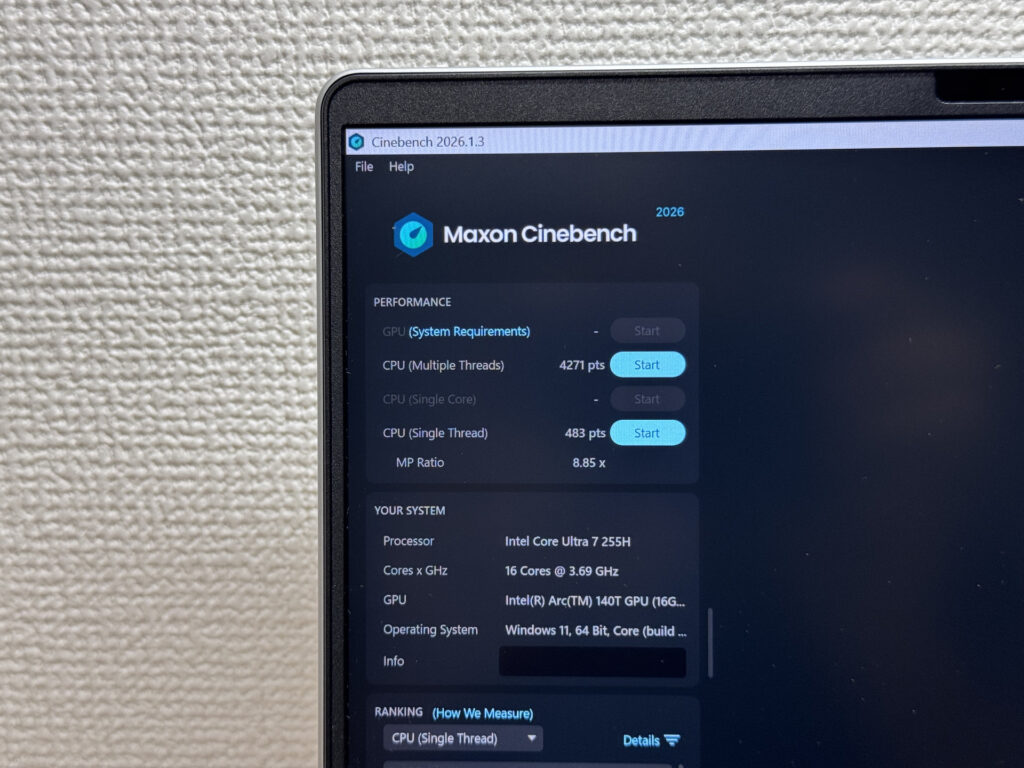 4271 points on Cinebench 2026 multi-core
| Score | Rating | What it feels like in real use |
|---|---|---|
| Up to 1,000 | Bare minimum | Light tasks work, but heavier processing or multitasking feels constrained. |
| 1,000–2,000 | Standard (power-efficient) | Handles daily tasks, but heavier loads create waiting. |
| 2,000–3,000 | Comfortable (mainstream) | Office, school, video calls all work comfortably. Plenty for most users. |
| 3,000–4,000 | High performance | Comfortable for multitasking, light/medium editing, and dev work. |
| 4,000+ | Very high performance This PC | Handles video editing and heavy workloads with room to spare. |
*Cinebench 2026 is the latest CPU multi-core benchmark. Scores trend lower than R23, so direct comparison isn't valid.
GPU performance came in at 3612 on 3DMark Steel Nomad Light, which is also on the higher end. It'll handle lighter PC games without breaking a sweat, and video exports go faster too.
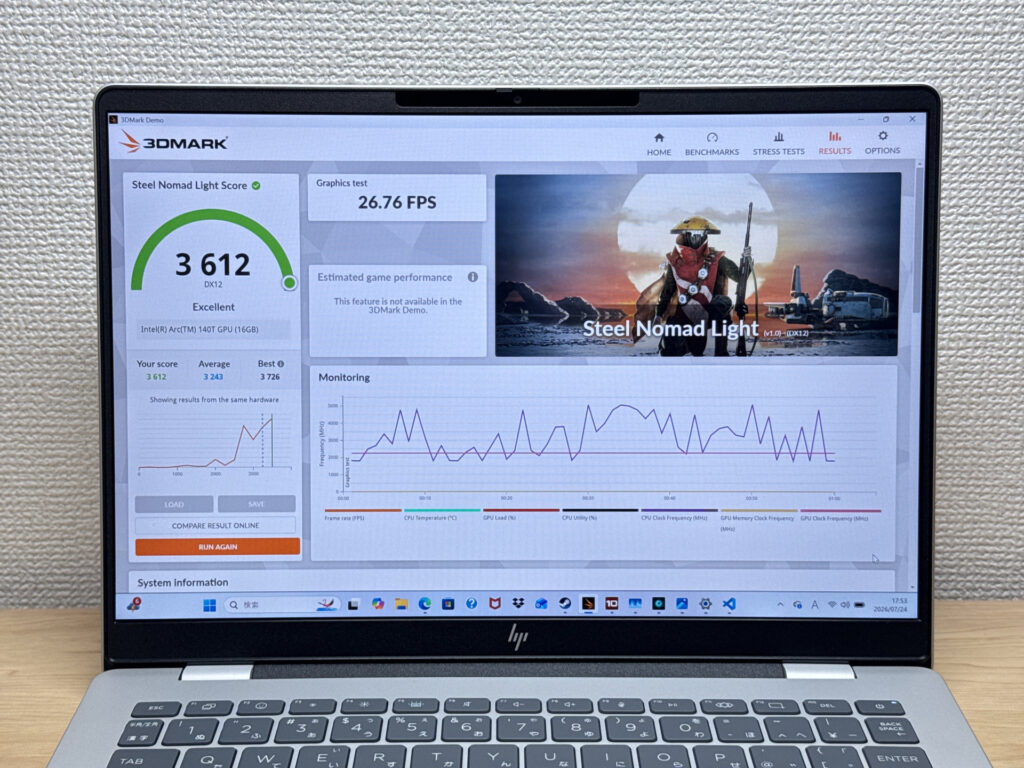 3612 on Steel Nomad Light — light gaming is no problem
| Score | Rating | What it feels like in real use |
|---|---|---|
| Up to 400 | Bare minimum | 3D performance is quite limited. Not really suited for gaming. |
| 400–900 | Light 3D | Lighter games and low-load 3D processing work. |
| 900–1,500 | Average (mainstream) | Standard for integrated GPUs. Light to medium games playable with right settings. |
| 1,500–2,200 | High performance | Strong for an integrated GPU. Games and 3D work feel comfortable. |
| 2,200+ | Very high performance This PC | Top-tier 3D performance for thin laptops. Real graphics headroom. |
*3DMark Steel Nomad Light targets thin laptops and integrated GPUs. Score range differs from Time Spy, so direct comparison isn't valid.
Storage speed impressed too — CrystalDiskMark clocked 6196 MB/s read and 5331 MB/s write. Big files move around without any friction.
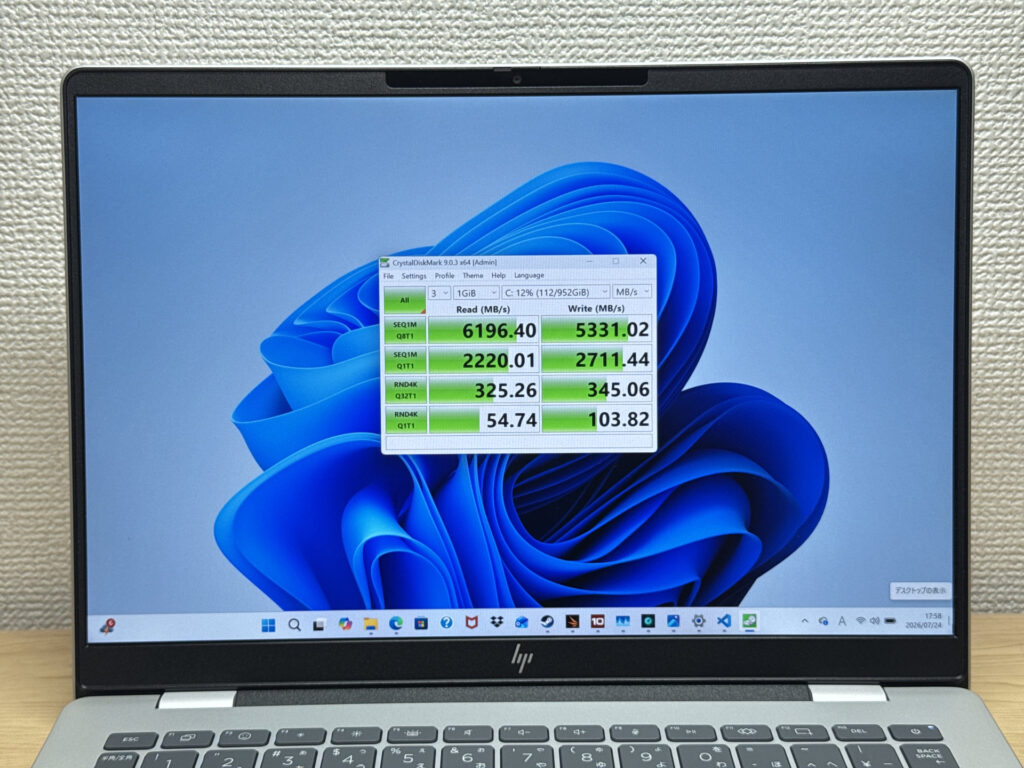 6196 MB/s read — this storage flies!
| Score | Rating | What it feels like in real use |
|---|---|---|
| Up to 600 MB/s | Bare minimum | Faster than HDD, but slow for modern SSDs. App launches feel slightly slow. |
| 600–1,500 MB/s | Average | Fine for daily use, though loading is noticeably slower than top-tier SSDs. |
| 1,500–3,500 MB/s | Comfortable (mainstream) | App launches and file loading feel smooth. No real complaints in daily use. |
| 3,500–5,500 MB/s | Fast | Loads large data and apps quickly. Definitely upper-tier SSD speed. |
| 5,500+ MB/s | Very fast This PC | High-end NVMe territory. Heavy data work without waiting. |
*CrystalDiskMark measures SSD speed. It mainly affects app launch and file loading speed, not overall PC performance.
Battery Life
Battery verdict: long-lasting
Let's talk battery. It packs a 68Wh cell, which is generous for this price bracket. The spec sheet lists up to 20 hours, so I'd call this laptop a genuine battery champ.
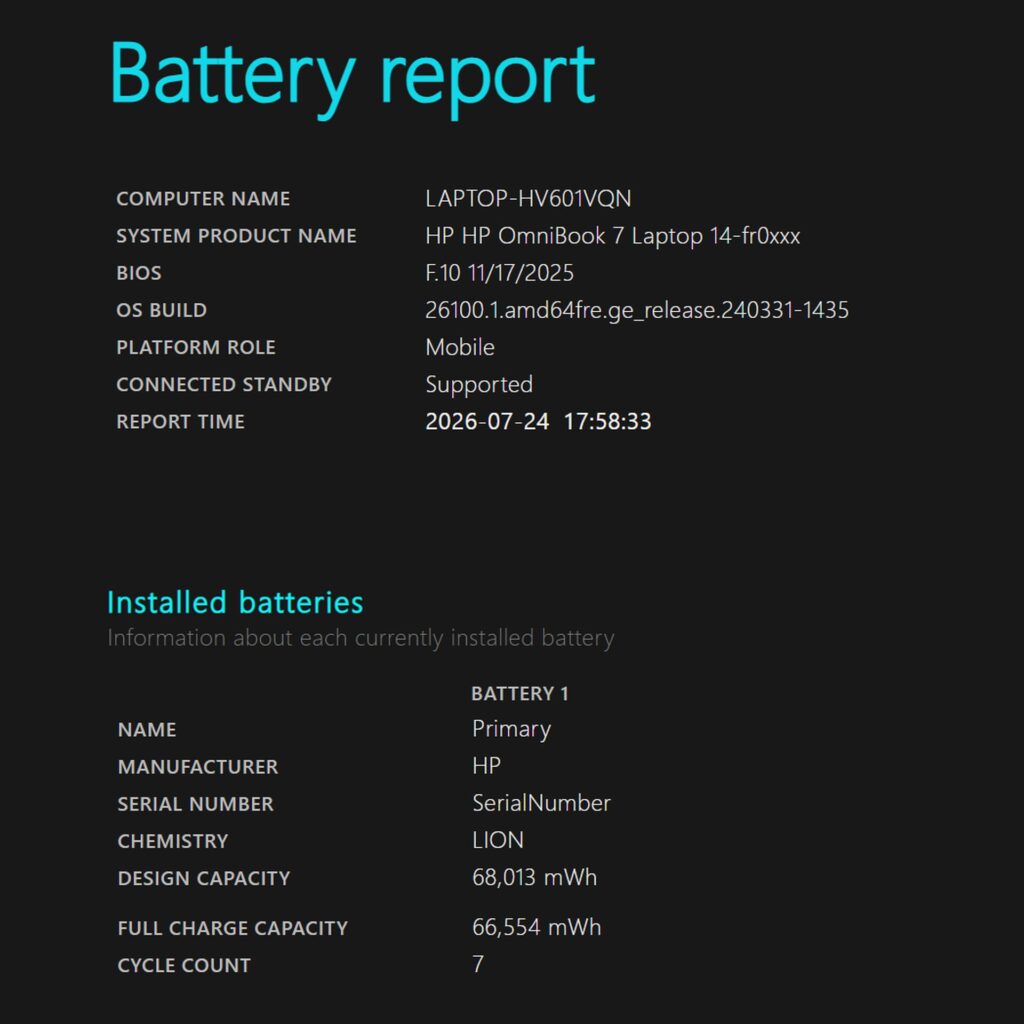 That 68Wh battery gives real peace of mind
By the way, the stock charger here is 100W, and when I tried plugging in my own Anker 65W USB-C charger, the screen flagged a slow-charging warning. It still showed as charging, but you might be leaving some power on the table. A 14-inch laptop with no discrete GPU needing 100W is honestly a little unusual.
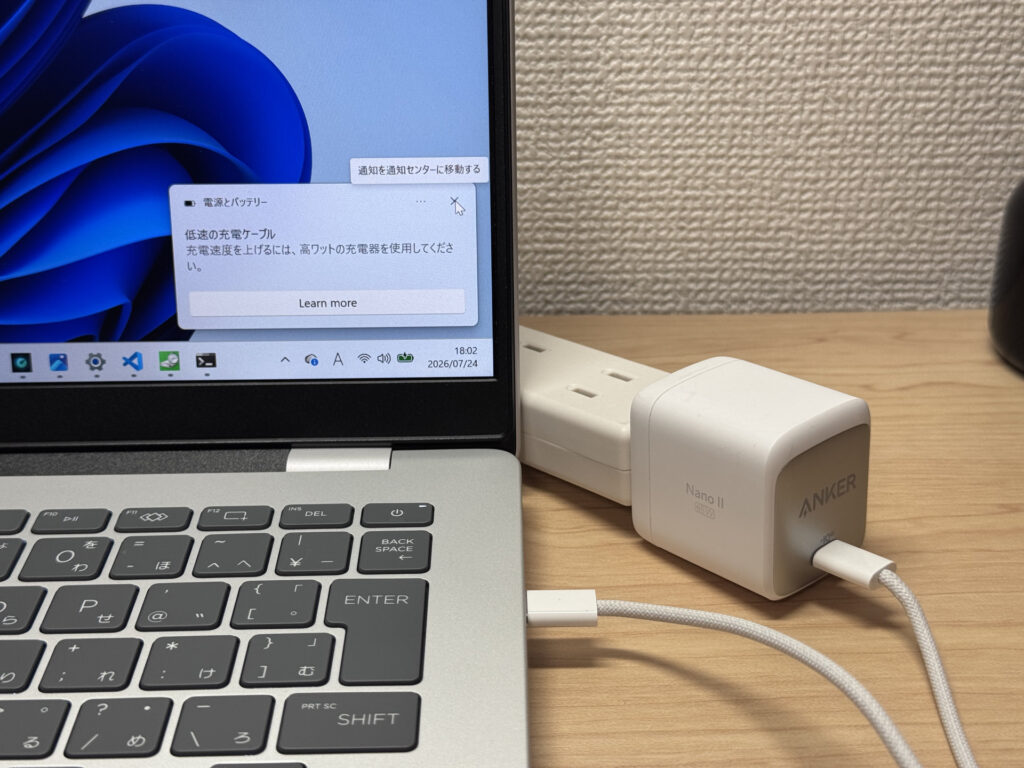 Plug in a 65W charger and you get a slow-charging warning...
Switch to Anker's 100W USB-C charger, though, and there's no warning — it charges just fine. If you're planning to travel with this, I'd recommend picking up a 100W-class third-party charger.
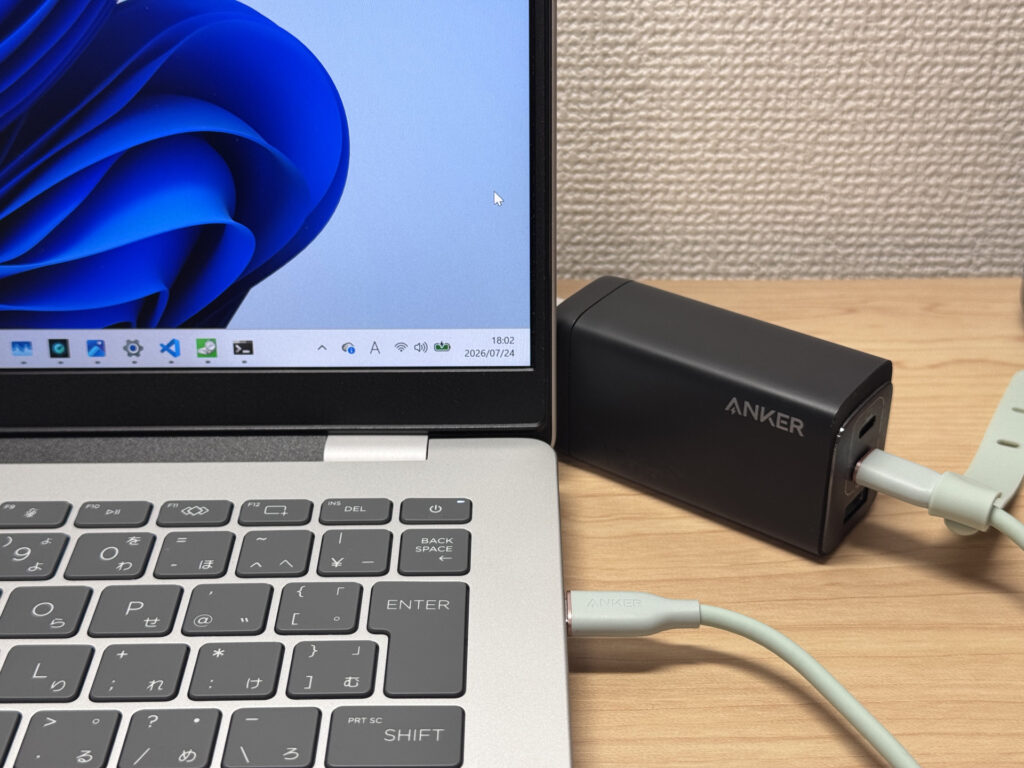 With a 100W charger, it charges without a hitch!
Real-world runtime will drop faster than the rated number depending on brightness and workload, so I'd plan on roughly 70-80% of the spec as a realistic baseline. Still, for lighter everyday work, this easily gets you through a full day without stress.
Fan Noise & Heat
Let's check fan noise and heat. At idle, I measured about 18dB — impressively quiet, basically silent in daily use.
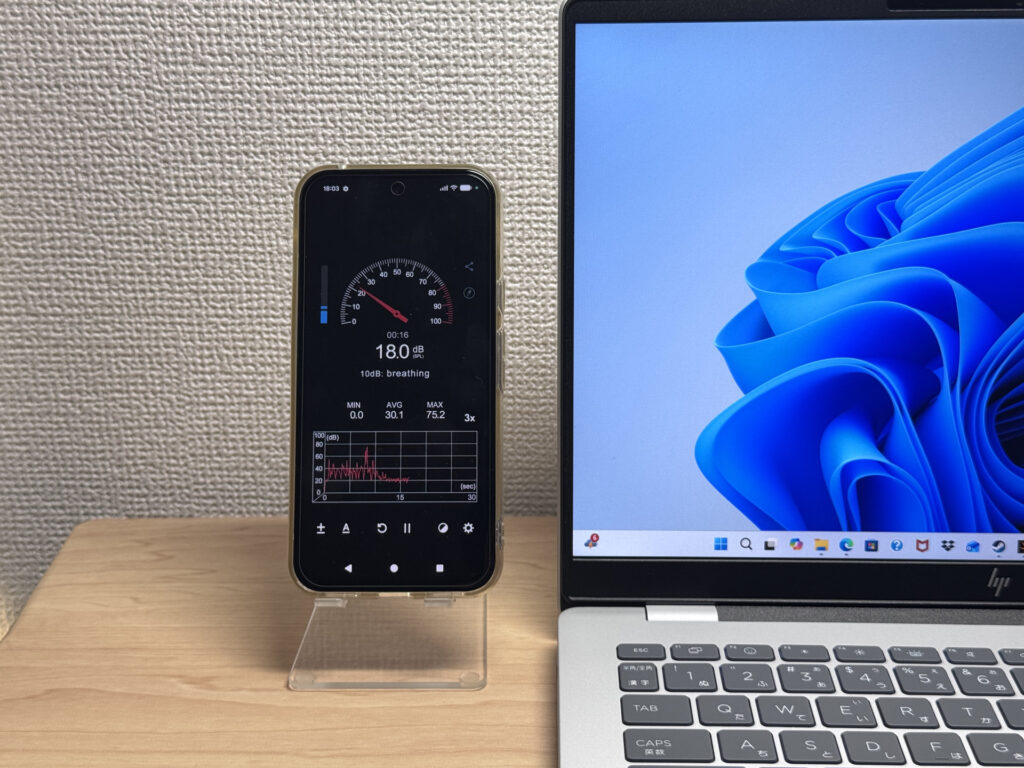 18dB at idle — nearly silent!
Under load, it climbs to 40.3dB, and at that point you can definitely hear the fan spinning up.
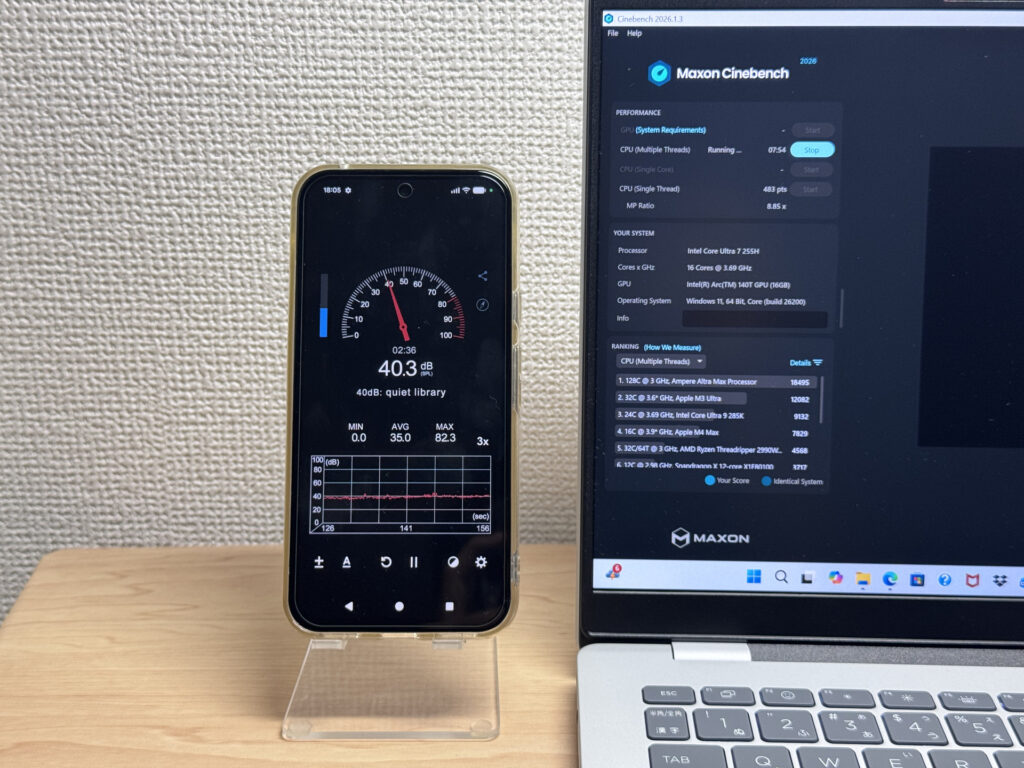 Climbs to 40.3dB under heavy load
| Noise Level | Rating | Feel |
|---|---|---|
| Under 30 dB | Near-silent Idle | Fan noise is barely perceptible — library-quiet and ideal for focused work. |
| 30–35 dB | Quiet | Faintly audible but non-distracting. Easy to work in a quiet room. |
| 35–40 dB | Noticeable | You can tell the fan is spinning, but it rarely interrupts work. |
| 40–45 dB | Somewhat loud Load | Can become distracting in quiet environments. Headphones start to help. |
| 45–50 dB | Loud | Noticeable stress over extended use. Cooling is clearly prioritized. |
| 50 dB+ | Very loud | Prominent fan noise under load — gaming/high-performance thermal design. |
The exhaust vent sits at the back of the chassis, so even if you're using a mouse with your right hand, warm air blowing on you shouldn't be an issue.
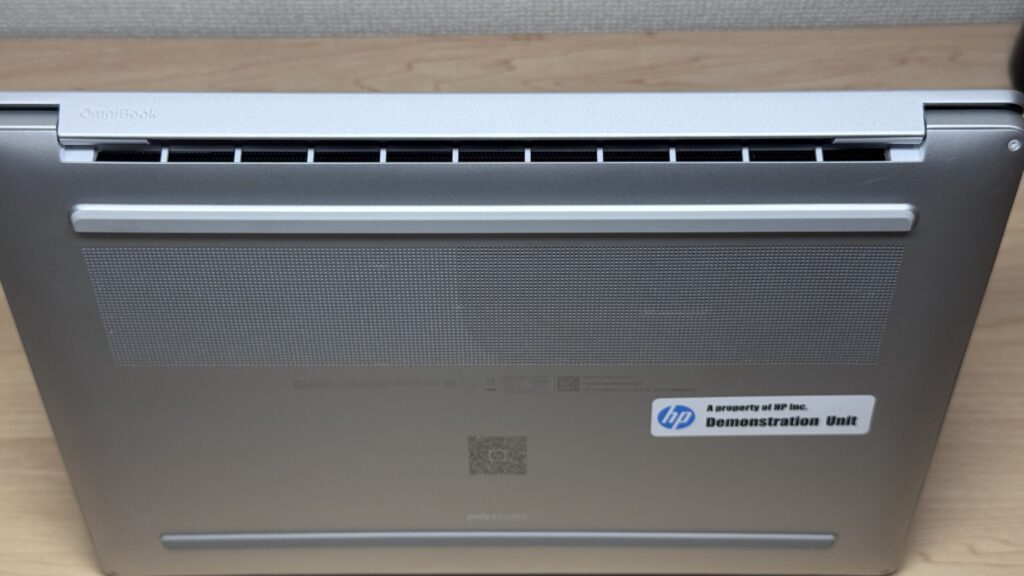 Rear-exhaust design keeps your hands comfortable
Port Selection
On to the ports. The left side has a USB-A port and a headphone jack.
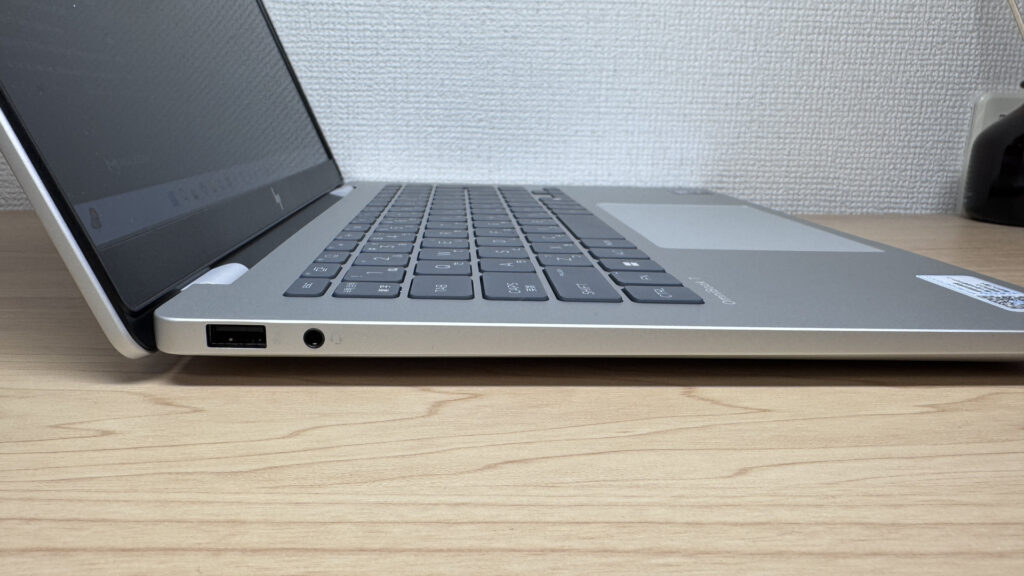 USB-A and a headphone jack on the left
The right side rounds things out with a Thunderbolt 4-capable USB-C port, a second USB-C, another USB-A, and HDMI 2.1 — the expandability here is genuinely strong. You can hook up most peripherals without ever needing a hub.
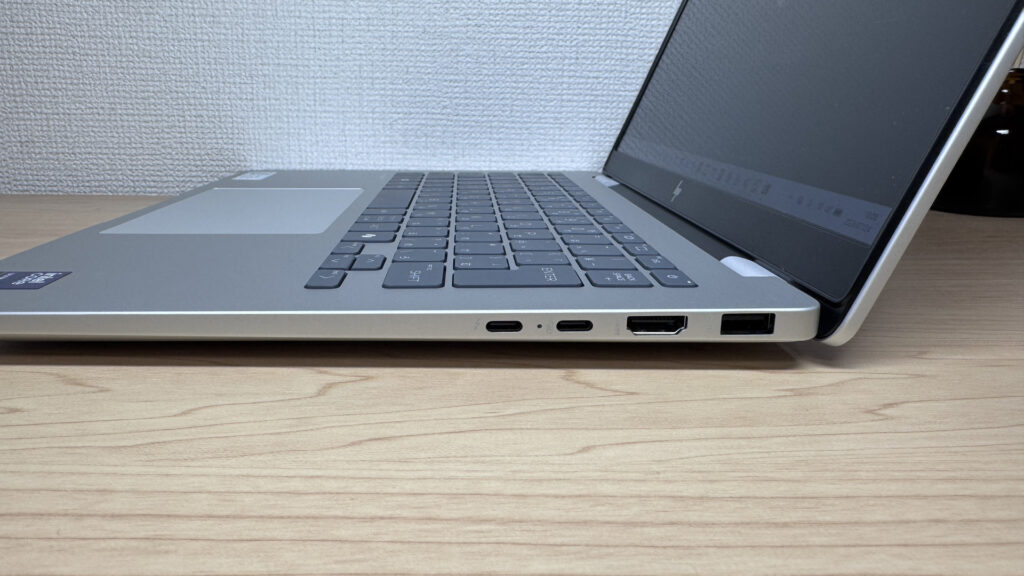 Thunderbolt 4 and more packed onto the right side
I hooked it up to a 4K monitor, and 4K output over HDMI worked flawlessly.
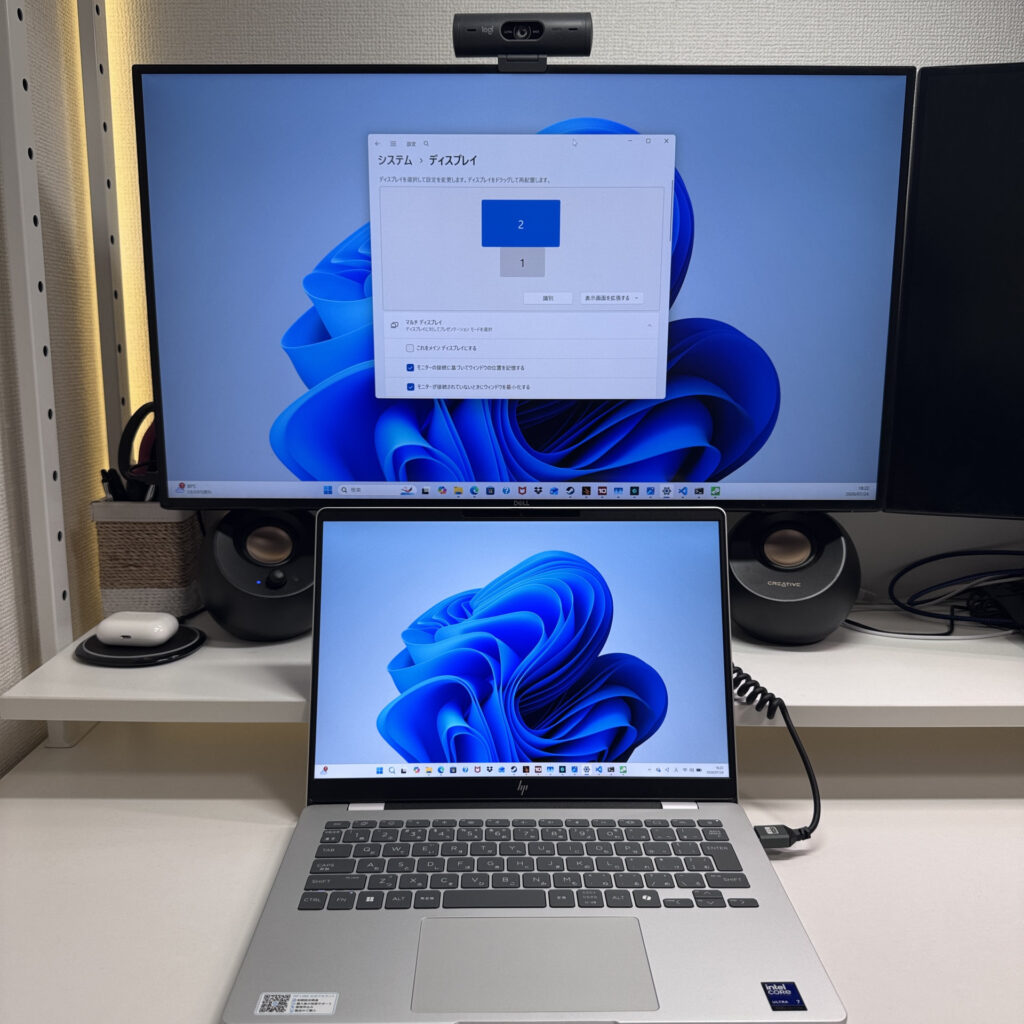 4K output over HDMI, no sweat
Adding USB-C video output into the mix, I got two 4K monitors plus a portable display running simultaneously — four screens total, all off this one laptop. It's wild that laptops can pull this off now. Genuinely impressive 👍.
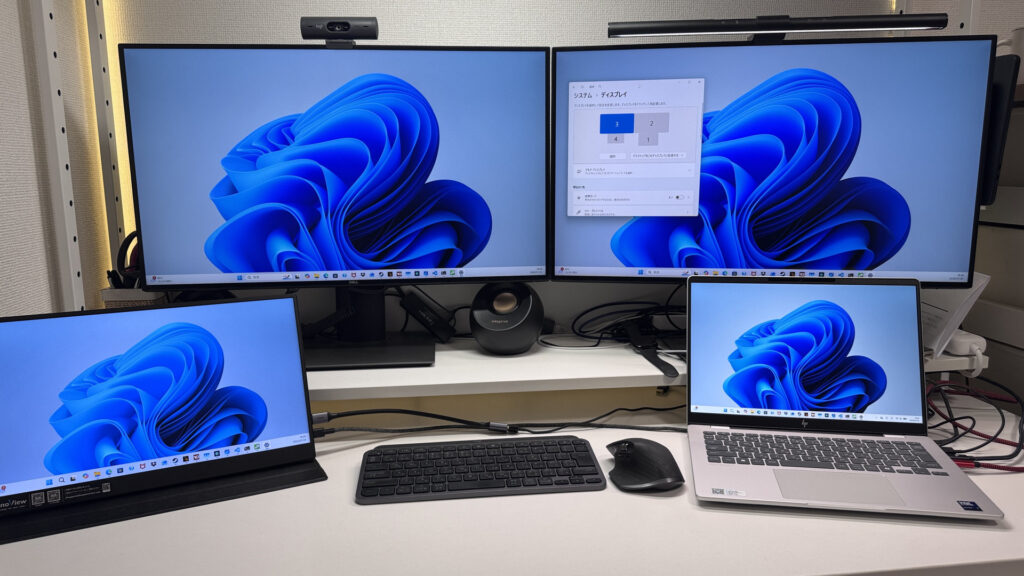 USB-C plus HDMI gets you a clean 4-screen setup!
And if you need even more ports, just pair it with a USB-C hub — plenty of room to expand further.
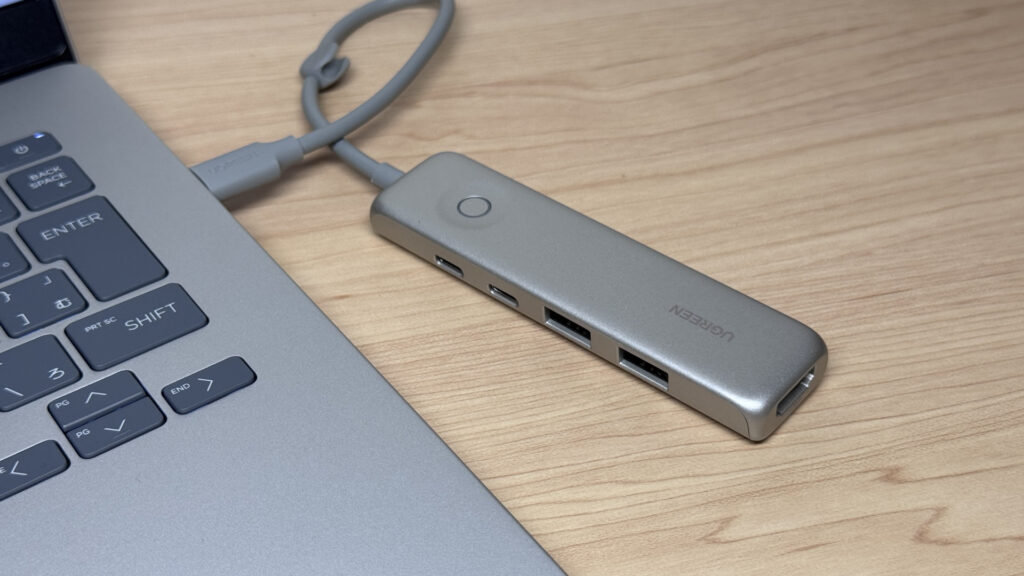 Add a hub and expandability goes up even more
Webcam
I also checked out the webcam. It's a 2-megapixel sensor, and in practice the image has decent detail and looks bright, so video calls should come through looking clean.
 Surprisingly clean image for a 2MP sensor!
There's a privacy shutter too, so you can physically cover the lens whenever you don't want the camera active. It's a physical switch rather than a software toggle, which adds some real peace of mind.
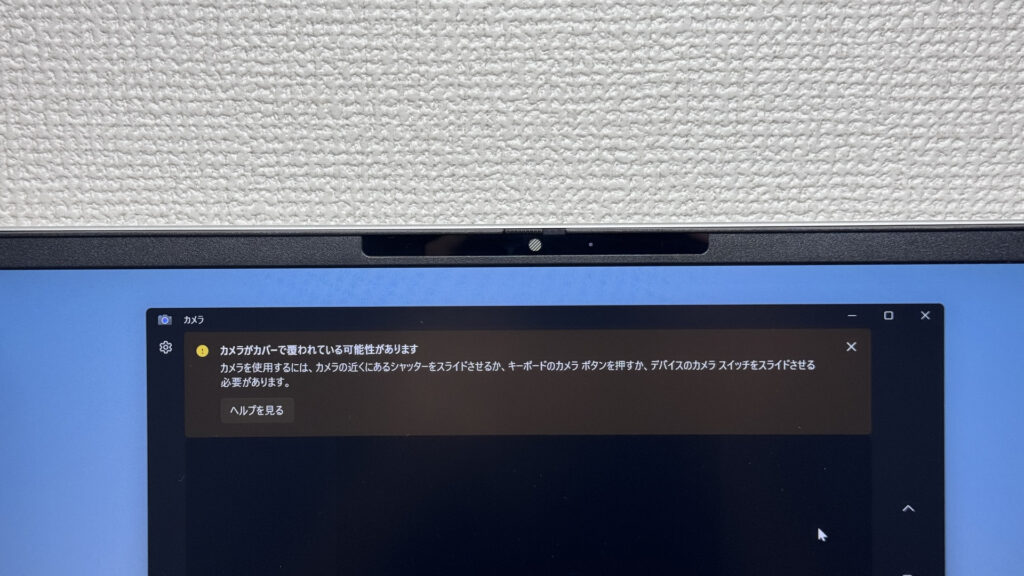 That physical shutter is reassuring to have
Speaker Quality
Let's check the speakers. I played a movie, and dialogue came through clearly.
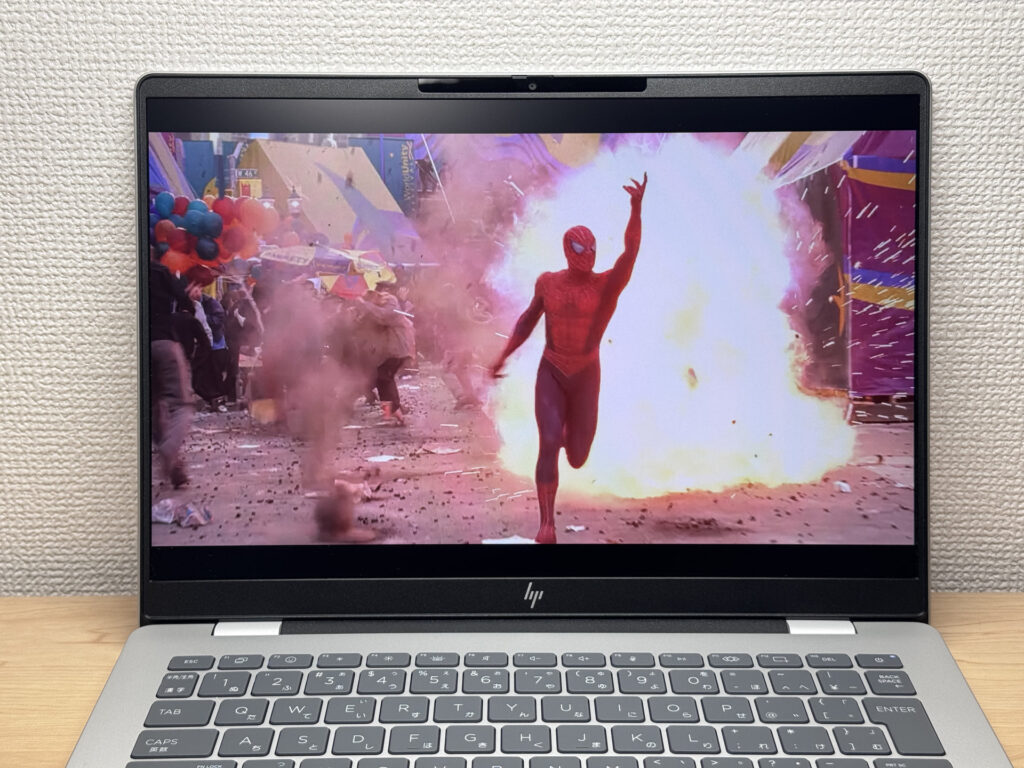 Crisp, clear audio while watching a movie!
That's apparently thanks to the Poly Studio sound system on board, and the official claim of "clear, rich sound" doesn't seem like marketing fluff. The speakers sit toward the front of the chassis too, which helps the sound spread out nicely.
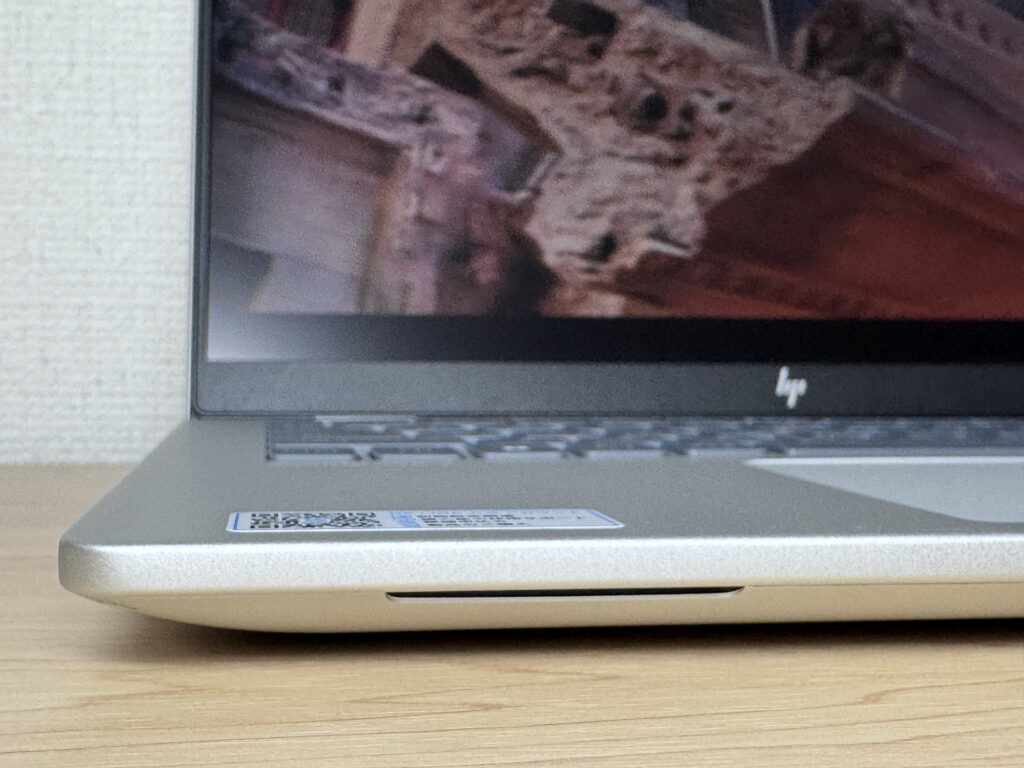 Front-firing speaker placement is doing good work here
Security
For security, it supports facial recognition through Windows Hello, so just opening the lid unlocks it instantly. A quietly handy feature.
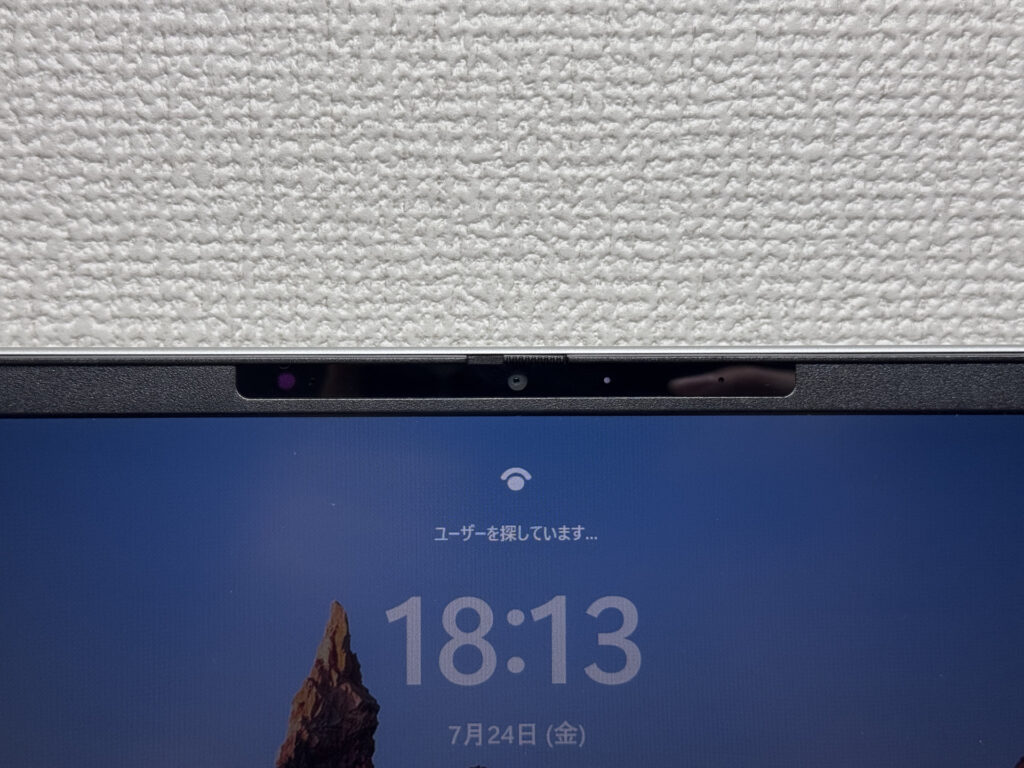 Windows Hello gets you logged in instantly
Price
On price: given you're getting Thunderbolt 4, HDMI 2.1, and a privacy shutter, starting at $1,000.00 feels like genuinely good value.
Final Verdict
Overall, the OmniBook 7 14-fr strikes a nice balance between battery life, performance, and expandability — it's basically the standard-bearer for a 14-inch mobile laptop. Needing a 100W-class charger and some audible fan noise under load are minor gripes, but even accounting for those, getting this level of performance, Thunderbolt 4, and 4-screen output at this price is a genuinely good deal. I'd expect this laptop to hold up for five-plus years of use. This one's a great fit for students knee-deep in coding or reports, and for business folks who want to run multiple monitors.
Expandability that stretches all the way to 4-screen output!
Where to Buy
* Prices may vary. Please check each store for the latest price and availability.
About the author