
My battery drains so fast when I'm out and about that I can't settle into any proper work, and hauling a charger round in my bag every day gets tedious — which laptop actually goes the distance?
Hello, Takumi here from ZippyLaptop.
You know the feeling — you're out working on your laptop and you can't stop eyeing the battery percentage instead of actually getting on with things. Hunting for a socket, or remembering to chuck the charger in your bag every time, gets tedious fast.
So you go looking for a laptop with decent battery life. But battery life comes down to more than just the spec sheet, and that's exactly how people end up with a nasty surprise — a laptop that can't make it through the day once you're actually using it out and about.
So in this guide, drawing on hands-on time with a stack of laptops, I'll run through the specs you really can't skip when picking a long-battery laptop, plus a few tricks to stretch that runtime even further👍 Read to the end and you'll know exactly which laptop lets you stop worrying about plug sockets.
Right, let's get into it! 🏃♂️
Quick Answer
I'll get straight to the point.
For real battery life, look for 60Wh+ capacity, a light 13–14 inch body, and 16GB+ of RAM.
Based on the conclusion above, here are the 3 laptops I'd recommend first.
If you're stuck deciding, picking from this shortlist will rarely lead you wrong.
The rest of the article breaks down the differences and how to choose.
Our TOP 3 Picks
OLED brilliance at a fair price — handles work and media, wherever you are.
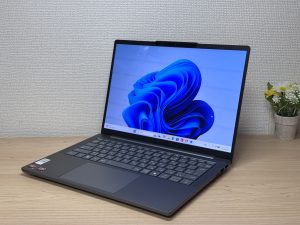
OLED display, class-leading keyboard feel — genuinely good value for the money.
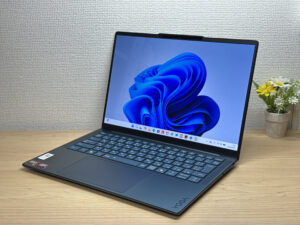
About 1.2 kg (2.6 lbs) and a 3K OLED — pricey, but you can see exactly where it went.

Buying Guide
Specs: 60Wh+ battery capacity and an efficient CPU are the bare minimum for real battery life
On the spec side, the number to lock in on is at least a 60Wh battery. Alongside that, it's worth checking these three things:
- Battery capacity: 60Wh or more
- CPU: an efficiency-focused chip (efficiency matters more than the exact model number)
- RAM: 16GB or more (don't sacrifice performance for battery life)
A common mistake is picking a laptop purely off the manufacturer's "up to X hours" battery claim on the spec sheet, only to find it falls well short once you're actually using it out and about.
Those manufacturer figures are measured under each brand's own test conditions, so real-world runtime varies a fair bit depending on screen brightness and what you're actually doing. I'd say it's best not to take the advertised battery life too much at face value. As a rough guide, if you get around 60% of the quoted figure in everyday use, you're not far off.
That's why I put more weight on the raw battery capacity than the advertised runtime. You can check this via the "Wh" figure — the higher it is, the more power the battery can store.
Of course, actual battery life also comes down to how much power the CPU and display draw, but capacity itself doesn't lie. If you're planning long stretches of work away from a socket, this is the figure worth nailing down.
For a modern ultraportable, I'd treat 60Wh or more as a sensible baseline for battery capacity. As for the CPU, there's no need to chase the exact model number — just prioritise efficiency. On the Intel side, the U-series chips are a solid shout. And if you're after a Mac, MacBook Airs with M4 or later Apple Silicon are particularly efficient and hold a charge well.
That said, I wouldn't recommend sacrificing performance purely to chase battery life. Stick to 16GB of RAM or more and you'll be sorted for web browsing, Office work, and everyday laptop tasks generally.
Search using the specs above and you'll find it much easier to land on a laptop that balances great battery life with solid performance.
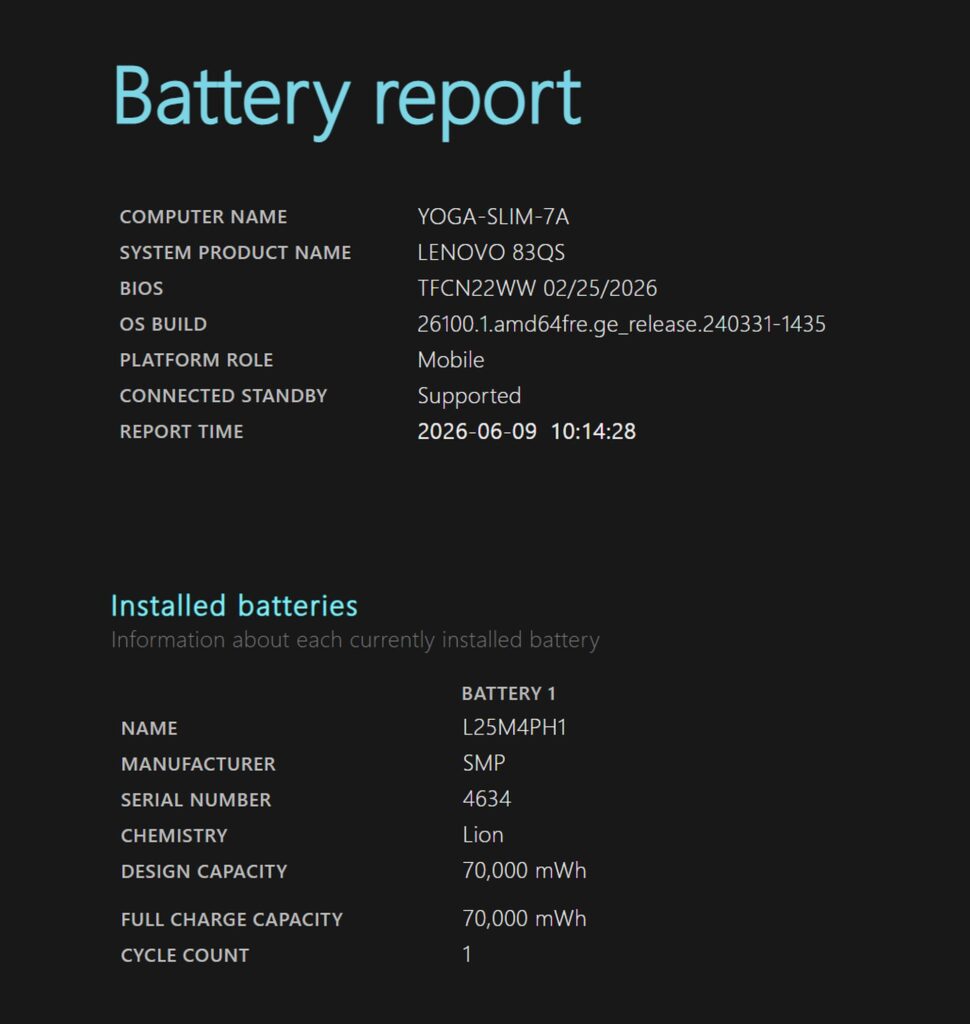 The Lenovo Yoga Slim 7 Gen 11, for example, packs a hefty 70Wh battery into a slim body.
Usability: A light 13–14 inch body gets you both battery life and portability
For everyday usability, I'd go for a lightweight 13–14 inch model.
- Screen size: 13–14 inches
- Weight: as light as possible
A familiar pattern: someone picks a 15-inch-plus model for the bigger screen, then finds the battery drains faster than expected once they're actually out using it.
A bigger screen is easier to work on, but the display also tends to draw a lot more power, which puts it at a disadvantage if battery life is your top priority.
If you're specifically after a laptop with great battery life, chances are you're also after something that's genuinely easy to carry around.
That's where the 13–14 inch class does well — it strikes a nice balance between portability and having a screen you can actually see properly. 14 inches in particular is a sweet spot: enough screen real estate to get on with work, while keeping the body compact overall. You can pull it out of your bag at a café or on the move without a second thought.
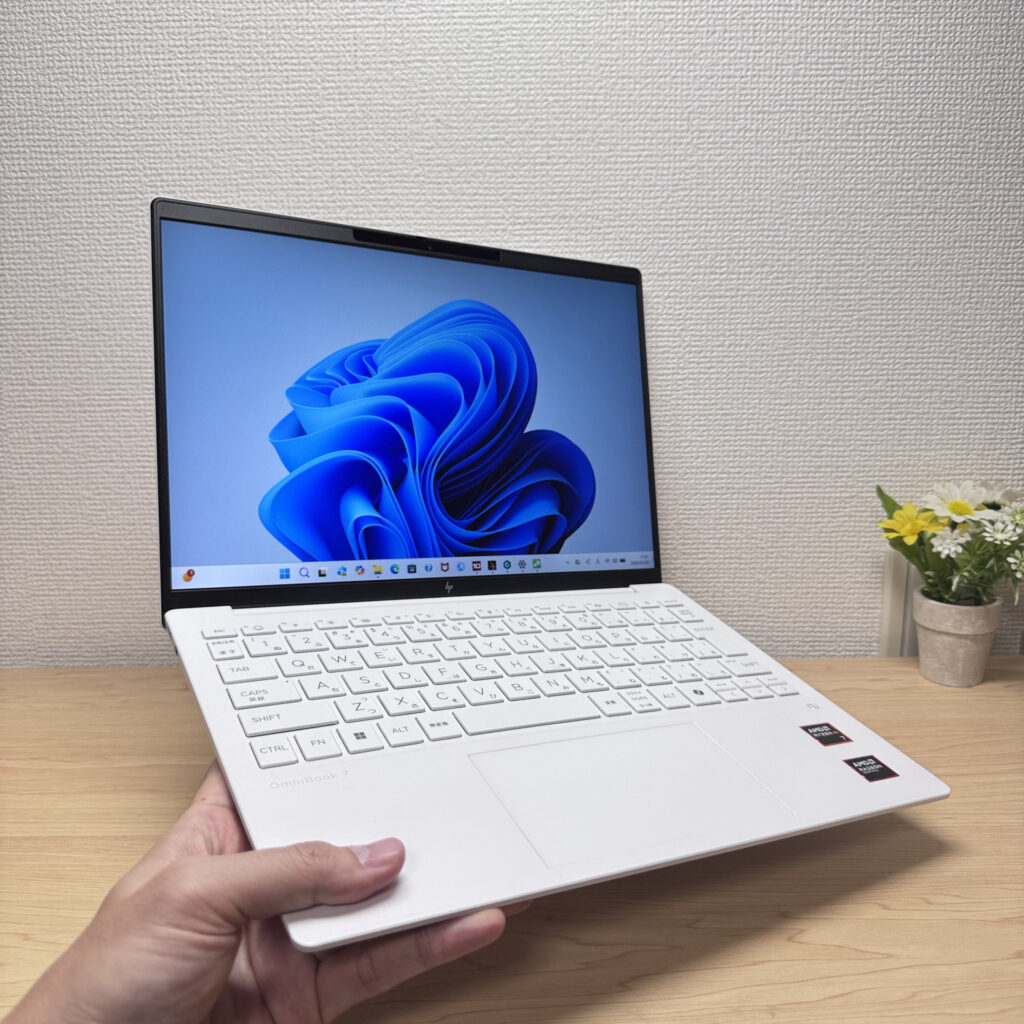 Laptops with great battery life tend to fall in that 14-inch-ish, lightweight bracket.
Go light and long-lasting, and you end up with one laptop you can use anywhere without worrying about the charge. 15-inch-plus models with big screens are tempting, but if you're after both battery life and portability, they're honestly at a bit of a disadvantage.
Tricks to stretch your battery life further
Battery life doesn't just come down to the laptop's specs — how you use it matters a fair bit too. A few small tweaks to your settings can meaningfully stretch the runtime.
The three that make the biggest difference:
- Turn down your screen brightness
- Use dark mode if you've got an OLED screen
- Turn on Windows' battery saver mode
The simplest change with the quickest payoff is turning down your screen brightness. This helps whether you've got an IPS LCD or an OLED panel — even a slightly dimmer setting cuts battery drain.
If your laptop has an OLED screen, dark mode is genuinely worth using too. OLED panels don't light up black pixels at all, so the more black on screen, the less power it draws.
Windows' battery saver mode also helps by dialling back CPU activity and background tasks to cut power use. Just bear in mind performance on heavier tasks takes a hit while it's switched on, so it's worth toggling back to normal mode depending on what you're doing.
And as a fallback, popping a compact USB-C charger in your bag isn't a bad shout either. Most modern ultraportables support USB-C charging around 65W, so a small charger from a brand like Anker means you can top up on the go without much fuss.
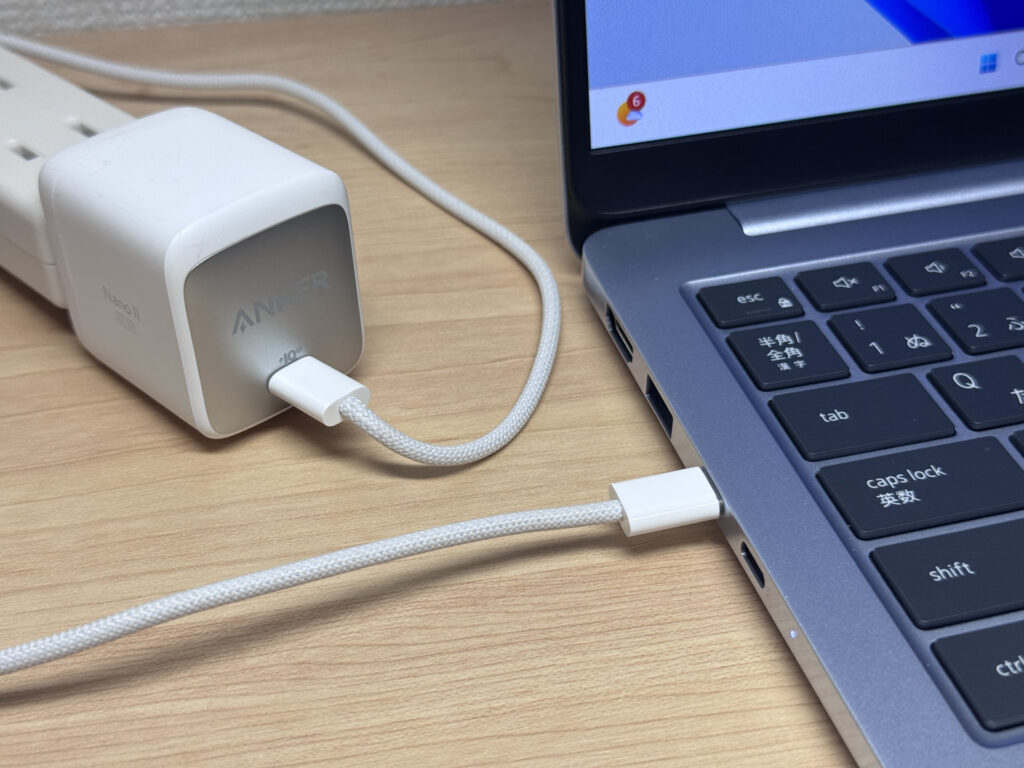 USB-C chargers have got properly tiny these days.
If you want extra peace of mind, keeping a high-output power bank on hand is a sensible move too.
For what it's worth, my own laptop power bank weighs 562g (around 1.2lb) — I'll admit, that's on the heavier side🥲. There are lighter laptop-compatible power banks around now, so it's worth weighing output against actual weight when picking one.
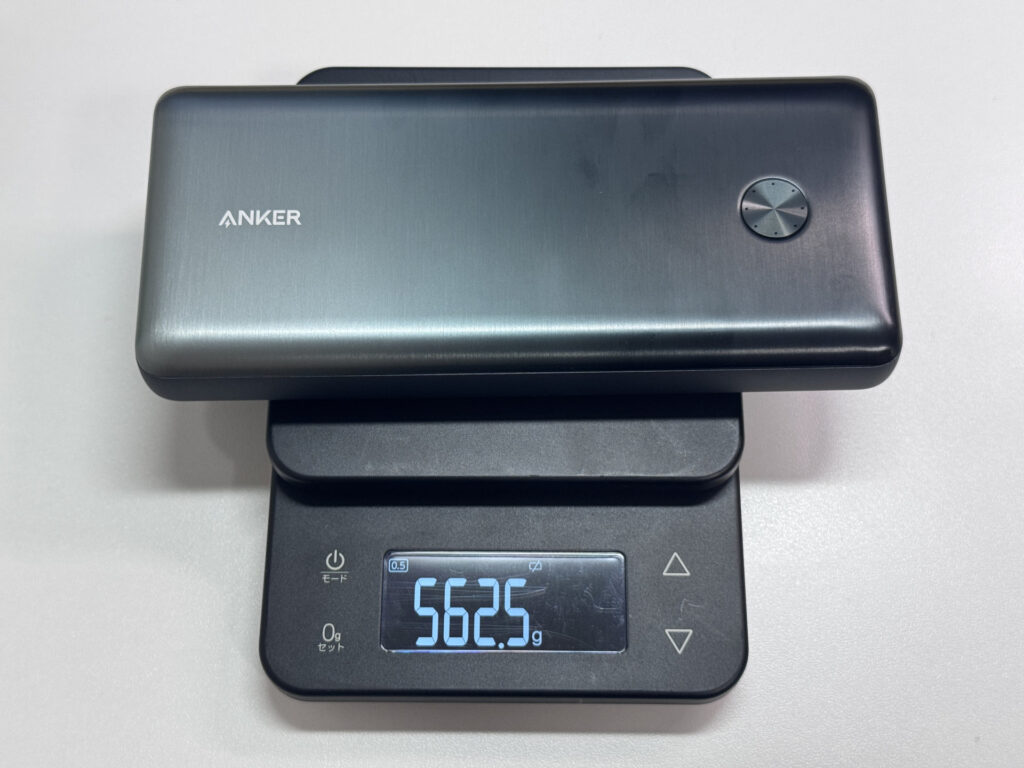
For USB-C chargers or power banks, matching your original charger's wattage is basically all you need to think about. If your laptop shipped with a 65W charger, look for something rated 65W or higher.
Combine these habits and you won't be hunting for a socket even on a full day out.
So, to sum up — when picking a laptop with great battery life, these three things have you covered:
- Go with 60Wh or more of battery capacity (treat the catalogue runtime figure as a rough guide only)
- Pick a light 13–14 inch body
- Adjust how you use it too — screen brightness, battery saver mode, and so on
Nail these three and you'll find it much easier to land on a laptop that doesn't send you hunting for sockets while you're out👍
Find one laptop that lets you get on with work without worrying about the charge, and working away from home gets a lot less stressful.
This article covers laptops that tick all these boxes, so take a look below.
Our Picks
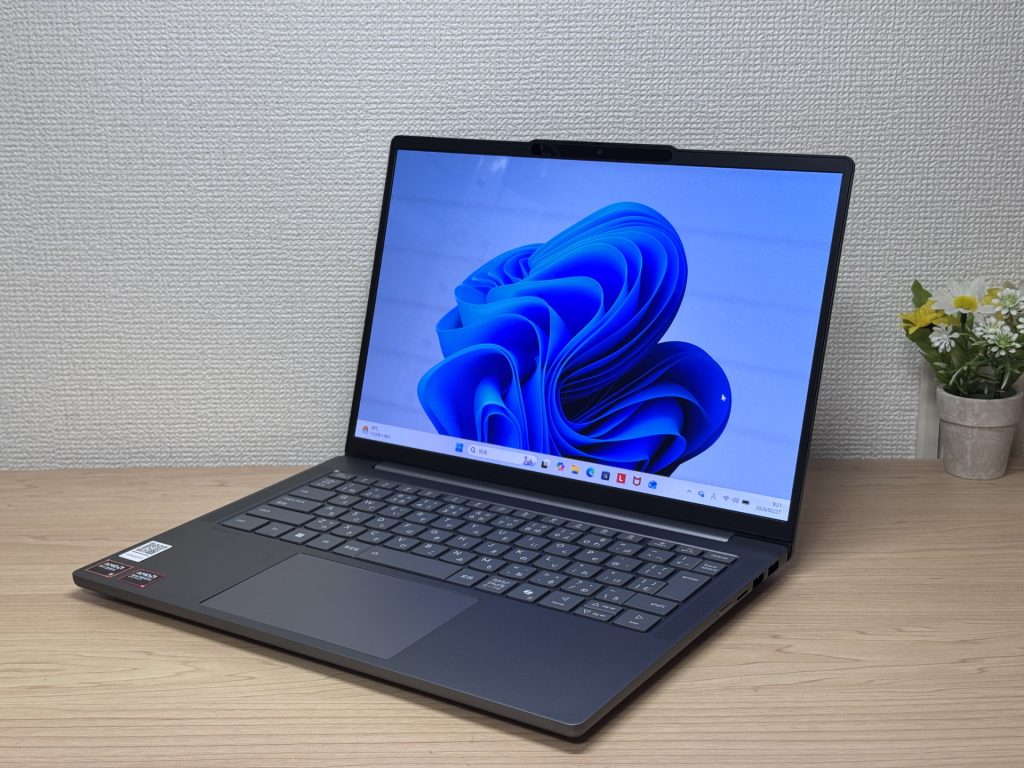
#1Lenovo IdeaPad Slim 5 Gen 10 (14-inch AMD)
- ·You carry your laptop to work or uni every day
- ·You want a great screen for films and streaming
- ·You need all-day battery life away from a power socket
- ·You need to connect up quickly in meetings or lectures
- ·Demanding gaming or heavy video editing is your primary use case
- ·You regularly do intensive tasks in quiet environments
Key Specs
- CPU
- AMD Ryzen AI 5
- Display
- 14.0-inch
- RAM
- 16GB
- Weight
- 1.39 kg (3.06 lbs)
- Storage
- 512GB SSD
- Battery
- ~19.8h
Why We Picked It
IdeaPad Slim 5 Gen 10 (14" AMD) is a 14-inch laptop that genuinely earns its value tag, largely down to that OLED display. At this price, the colour vibrancy and black depth are in a class of their own — great for streaming films or sorting through photos. A PCMark 10 score of 6,778, 16 GB of RAM, and a 60 Wh battery rated up to 19.8 hours round off a very compelling package.
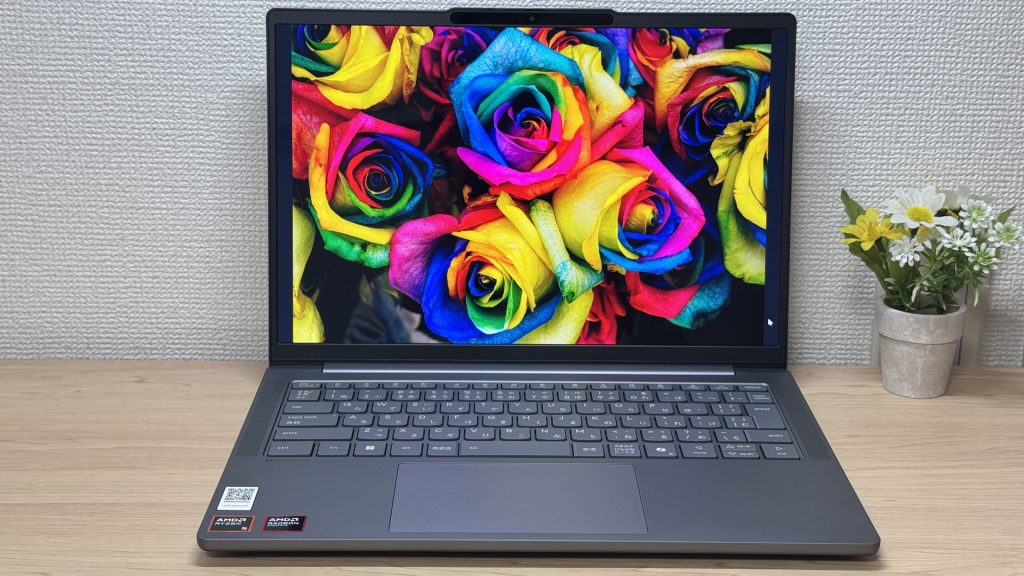 That OLED really is something.
The glossy panel does pick up reflections — fair trade-off for that display quality, honestly. Ports are plentiful enough that you won't need a USB-C hub, which is always appreciated. A solid all-rounder for everyday use and lighter creative work.
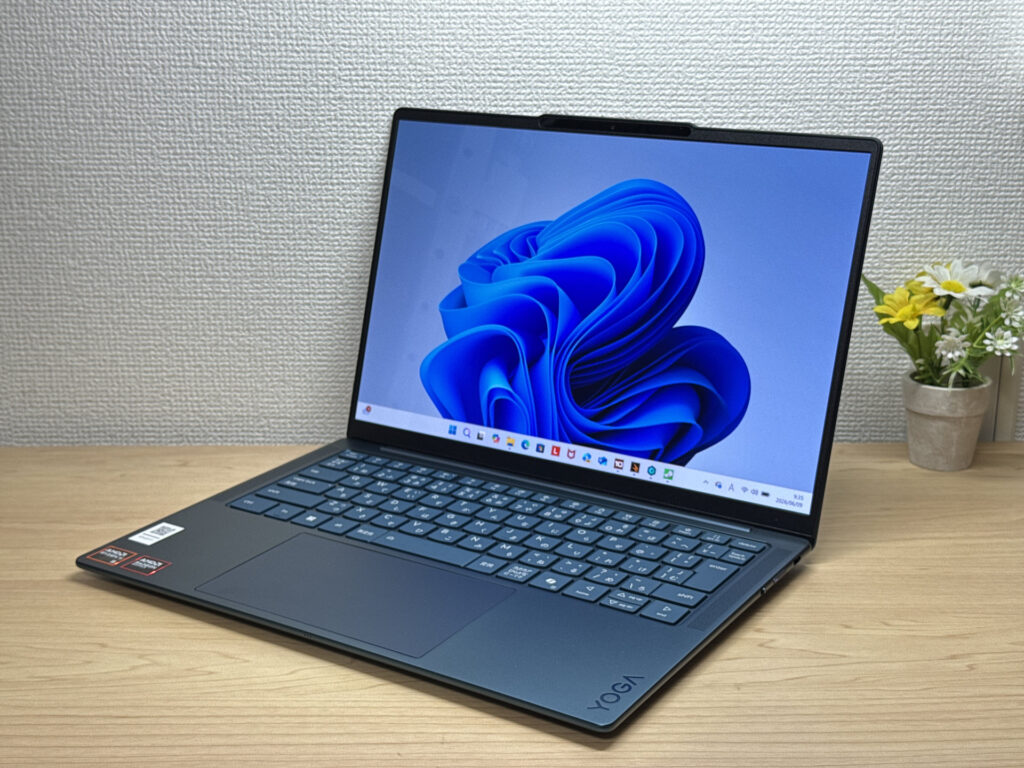
#2Lenovo Yoga Slim 7a Gen 11 (14-inch AMD)
- ·You carry your laptop every day and want something genuinely light
- ·You want a sharp, vivid display for streaming films and shows
- ·You need a reliable daily machine for work, uni, and general productivity
- ·You want an OLED laptop that's slim, light, and won't break the bank
- ·Your main use is demanding gaming or heavy video editing work
- ·You rely on USB-A, HDMI, or have lots of peripherals to connect directly
Key Specs
- CPU
- AMD Ryzen AI 5 430
- Display
- 14.0-inch 1920x1200 OLED touch
- RAM
- 16GB
- Weight
- 1.14 kg (2.54 lbs)
- Storage
- 512GB SSD
- Battery
- ~19.0h
Why We Picked It
Yoga Slim 7 Gen 11 (14-inch AMD) is a slim 14-inch laptop with an OLED display — 1.15 kg and 13.9 mm thin, at a price that genuinely impresses for the spec you're getting. Hands-on, the keyboard feel was a personal highlight — noticeably better than expected for this tier. The downside is that there's no headphone jack and you're limited to USB-C ports only, so anyone with lots of peripherals will need a hub. But at this price point, the value is hard to argue with. A great shout for uni students working on essays, or anyone who wants a reliable daily carry for work, streaming, and café sessions.
An OLED at this price? You don't see that from other brands very often.
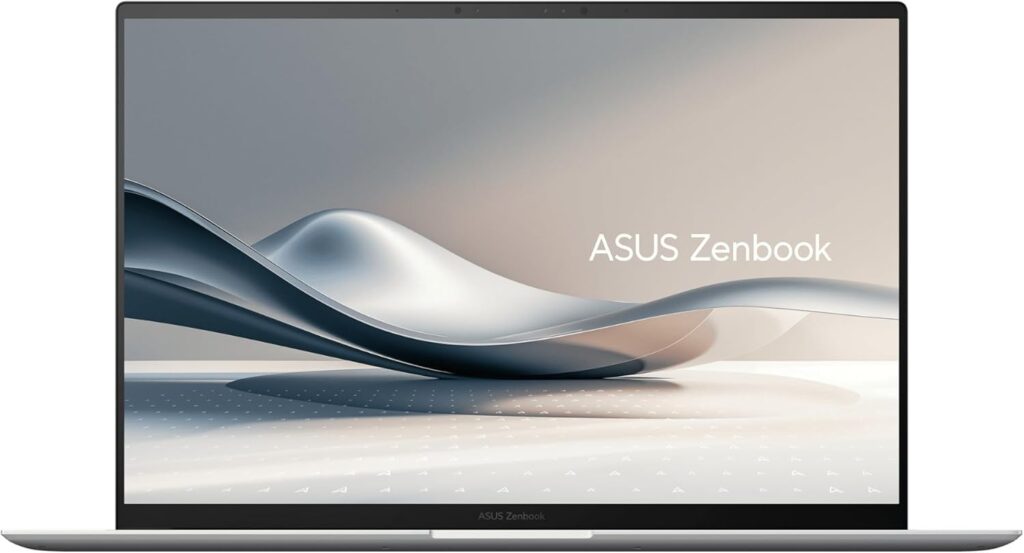
#3ASUS Zenbook S 14 (UX5406SA)
- ·You carry a laptop with you every day
- ·You want your photos and videos to look properly good on screen
- ·You work away from a desk and would rather not think about charging
- ·You value the build quality and low weight enough to pay for them
- ·Not for you if you're trying to keep the purchase price down
- ·Give it a miss if demanding games or serious video editing are the aim
- ·Worth care if you want to upgrade the memory or storage yourself
Key Specs
- CPU
- Intel Core Ultra 7 256V
- Display
- 14.0-inch 2880x1800 OLED
- RAM
- 16GB
- Weight
- 1.20 kg (2.65 lbs)
- Storage
- 1TB SSD
- Battery
- ~23.3h
Why We Picked It
The ASUS Zenbook S 14 (UX5406SA) manages 14-inch portability at around 1.2 kg (2.6 lbs) and just 12.9 mm thick alongside a 2880×1800 3K OLED panel running at 120 Hz — a high-end thin-and-light that doesn't give up either one. A Ceraluminum chassis, a 72Wh battery, Thunderbolt 4, HDMI and USB-A, all squeezed into that thickness, is fair to say impressive. The price sits at the upper end, and the memory is onboard only, so there's no adding more later on. That said, if you carry it daily and want your photos and videos to look right, the weight and the screen are precisely what you're paying for.
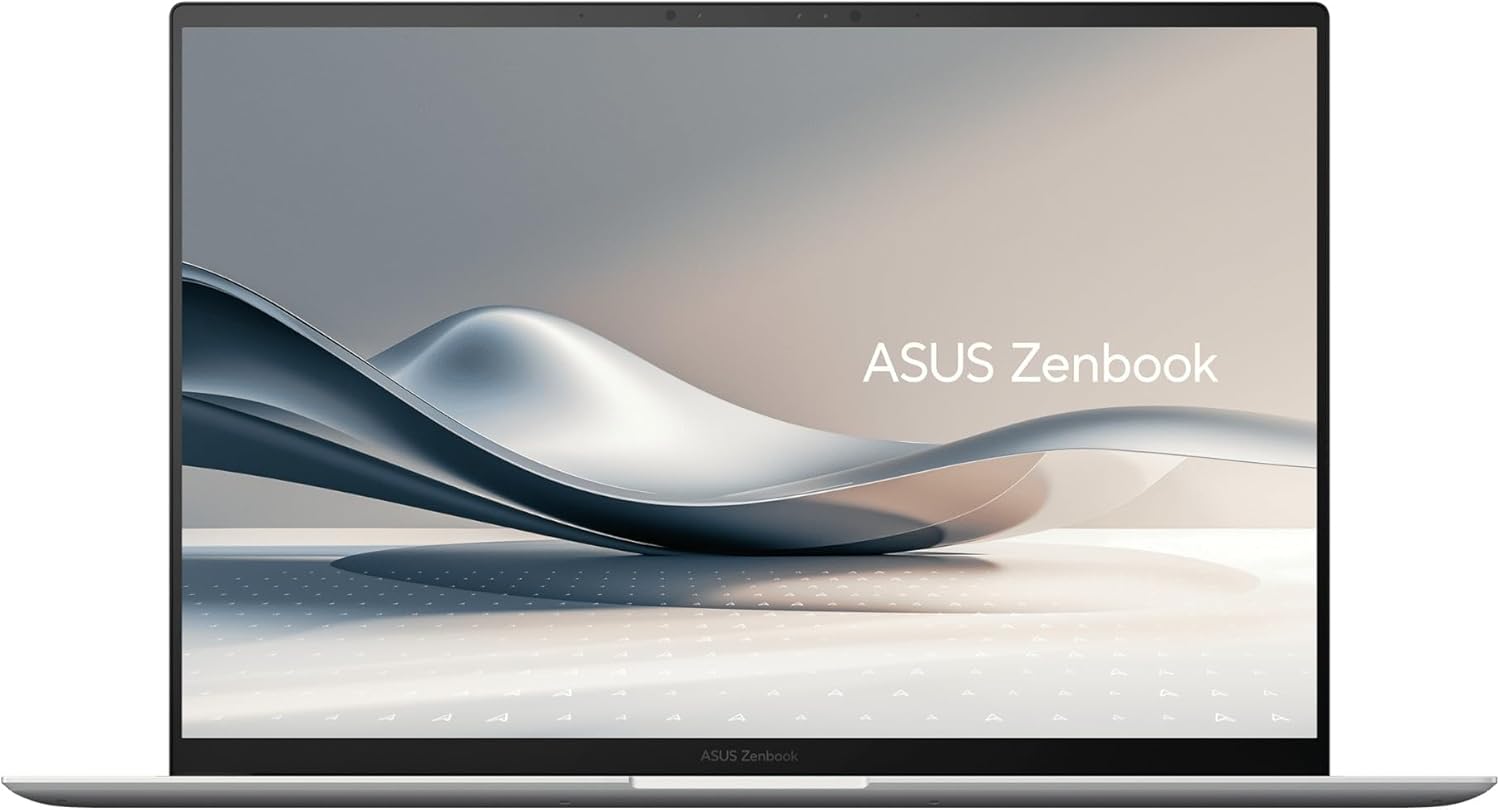 The 14-inch, roughly 1.2 kg (2.6 lbs) ASUS Zenbook S 14 (UX5406SA)
More Recommended Models
If our TOP 3 didn't quite click, take a look here too. These are picked with the same criteria, so you won't go far wrong either.
Cracking OLED in a featherlight 964g (2.1 lbs) body — hard to fault.
Under a kilo at 0.98 kg (2.2 lbs) and a claimed 32 hours — a 14-inch built around portability.
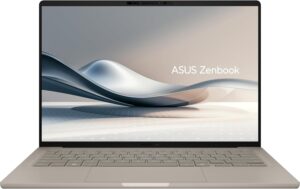
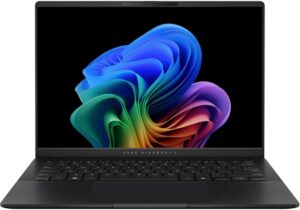
A 14-inch at roughly 1.3 kg (2.9 lbs) — current-gen power that's genuinely easy to carry.
Spec Comparison
Compare specs of all 6 recommended models at a glance.
Note: This table is ordered by our editors' picks for this use case, not by ZippyScore.
| Model | Image | Stores | Highlights | ZippyScore | CPU | RAM | Storage | Display | Battery | Weight | Full Review |
|---|---|---|---|---|---|---|---|---|---|---|---|
|
🥇 Best Overall
Lenovo
IdeaPad Slim 5 Gen 10 (14-inch AMD)
|
|
Amazon | OLED brilliance at a fair price — handles work and media, wherever you are. | Best 4.8/5 | AMD Ryzen AI 5 Passmark: 19,356 | 16GB | 512GB |
14.0"
|
~19.8h | 1.39 kg (3.06 lbs) | Full Review |
|
🥈 Best Balanced Pick
Lenovo
Yoga Slim 7a Gen 11 (14-inch AMD)
|
|
Amazon | OLED display, class-leading keyboard feel — genuinely good value for the money. | 4.6/5 | AMD Ryzen AI 5 430 Passmark: 13,437 | 16GB | 512GB |
14.0"
1920x1200
OLED
|
~19.0h | 1.14 kg (2.54 lbs) | Full Review |
|
🥉 Best Value Pick
ASUS
Zenbook S 14 (UX5406SA)
|
|
Amazon | About 1.2 kg (2.6 lbs) and a 3K OLED — pricey, but you can see exactly where it went. | 4.3/5 | Intel Core Ultra 7 256V Passmark: 19,556 | 16GB | Best 1TB |
Best 14.0"
2880x1800
OLED
|
~23.3h | 1.20 kg (2.65 lbs) | — |
|
Lenovo
Yoga Slim 7i Ultra Gen 11 Aura Edition
|
|
Amazon | Cracking OLED in a featherlight 964g (2.1 lbs) body — hard to fault. | 4.6/5 | Best Intel Core Ultra 5 325 Passmark: 21,039 | Best 32GB | Best 1TB |
Best 14.0"
2880x1800
OLED
|
~22.8h | Best 0.97 kg (2.15 lbs) | Full Review |
|
ASUS
Zenbook A14 (UX3407QA)
|
|
Amazon | Under a kilo at 0.98 kg (2.2 lbs) and a claimed 32 hours — a 14-inch built around portability. | 4.1/5 | Snapdragon X X1-26-100 | 16GB | Best 1TB |
14.0"
1920x1200
OLED
|
Best ~32.0h | 0.98 kg (2.16 lbs) | — |
|
ASUS
Vivobook S 14 (S5406SA)
|
|
Amazon | A 14-inch at roughly 1.3 kg (2.9 lbs) — current-gen power that's genuinely easy to carry. | 4.1/5 | Intel Core Ultra 5 226V Passmark: 18,095 | 16GB | 512GB |
14.0"
1920x1200
OLED
|
~21.5h | 1.30 kg (2.87 lbs) | — |
Frequently Asked Questions
How much should I trust the battery life figure on the spec sheet?
Snapdragon vs. Intel/AMD — which gets better battery life?
Windows or Mac — which lasts longer on a charge?
OLED or LCD — which is better for battery life?
Is the charger that comes with the laptop enough on its own?
Summary
Here's a quick recap of the conclusion from this article:
These are the models that meet those criteria:
- #1 Lenovo IdeaPad Slim 5 Gen 10 (14-inch AMD)
- #2 Lenovo Yoga Slim 7a Gen 11 (14-inch AMD)
- #3 ASUS Zenbook S 14 (UX5406SA)
- #4 Lenovo Yoga Slim 7i Ultra Gen 11 Aura Edition
- #5 ASUS Zenbook A14 (UX3407QA)
- #6 ASUS Vivobook S 14 (S5406SA)
We hope you find the laptop that's right for you here.
Happy laptop hunting!
About the author